
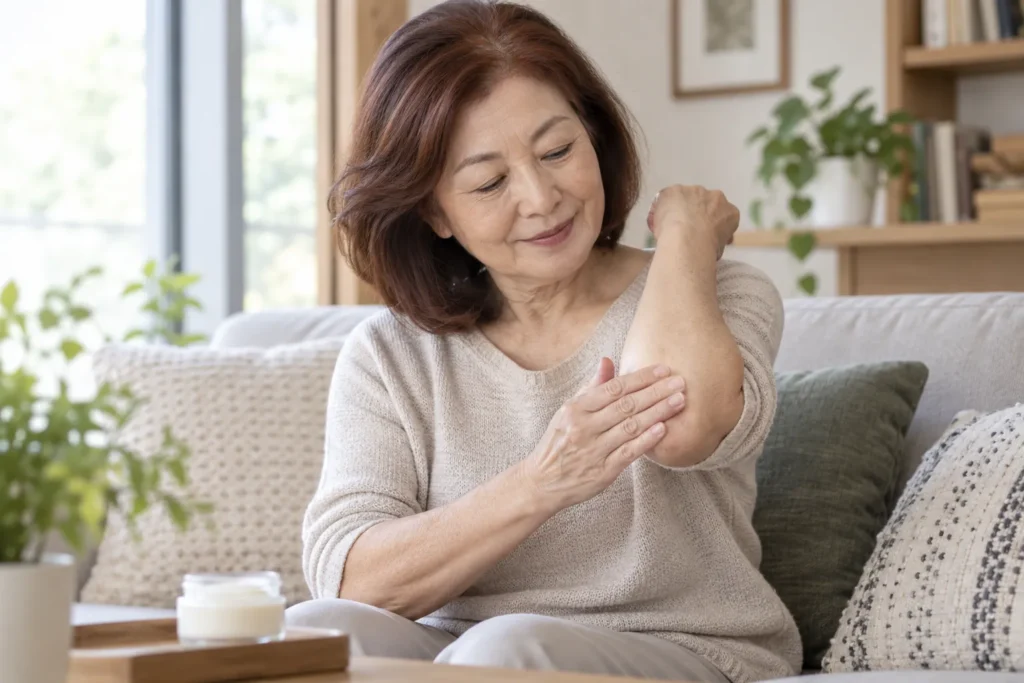
There is a particular kind of surprise that comes from noticing the knees or elbows in strong daylight. The skin can look drier, darker, duller or more deeply lined than the surrounding areas, even when the rest of the body feels reasonably comfortable. It may happen while pulling on a short-sleeved top, kneeling in the garden or seeing a photograph that catches an angle you rarely study. What feels unsettling is not vanity, but the sense that a familiar part of the body has quietly changed.
These areas often receive less care than the face, yet they live through constant bending, leaning, friction and exposure. As the skin matures, the effects of those everyday pressures can become more visible, and a quick swipe of lightweight lotion may no longer keep the surface feeling soft. The encouraging part is that rough-looking knees and elbows are not simply areas to hide. They can respond to thoughtful, consistent care that respects what the skin is experiencing.
Why the knees and elbows can feel different
The knees and elbows are working areas of the body. They flex repeatedly, press against clothing and furniture, and often bear weight during gardening, exercise, cleaning or ordinary movement. That repeated mechanical pressure can encourage the surface to feel thicker and less smooth than nearby skin. Because these joints move so often, any existing dryness can also become more noticeable in the folds and lines.
They are easy to neglect because they sit outside the usual facial skincare routine. Many people carefully cleanse and moisturise the face, neck and hands, then apply body lotion quickly without spending time on the rougher areas. The product may be spread too thinly, applied inconsistently or washed away before the next application. Over months and years, the difference between regularly cared-for skin and routinely overlooked skin can become easier to see.
Age changes the conditions in which the skin operates
Mature skin is not simply younger skin with more lines. The outer barrier, surface lipids, natural oil production and water-holding capacity can all change over time, leaving the skin less able to maintain the same softness with the same routine. This helps explain why a lotion that seemed perfectly adequate at forty may feel almost weightless at sixty. The product has not necessarily changed, but the needs of the skin may have moved beyond it.
Ageing also means the skin has accumulated more years of sun, weather, washing and friction. None of those influences acts alone, and the knees and elbows may carry several of them at once. A mature skincare routine works best when it responds to this overlap rather than blaming one single cause. That is the same whole-body thinking explored in our guide to caring for mature skin from neck to toe.
Dryness makes texture easier to see
When the outer skin contains less water, surface cells do not lie as smoothly as they do when well moisturised. Light reflects less evenly, so the area can appear dull, grey, crepey or more lined. On the knees and elbows, where the surface is already shaped by movement and pressure, that visual change can be especially obvious. The skin may look dramatically older even when part of the difference comes from temporary surface dryness.
Dryness can also change how the area feels under the fingertips. Instead of a flexible, comfortable surface, the skin may feel coarse, powdery or resistant. Clothing can catch against it, and bending the joint may create a sense of tightness. Improving moisture and conditioning will not erase every structural feature of a knee or elbow, but it can make the skin look and feel more cared for.
Roughness, dullness and dryness often travel together
People often shop for roughness, dullness and dryness as though each requires a completely separate product. In practice, these concerns frequently reinforce one another. A dry surface feels rougher, and a rough surface scatters light in a way that can make the skin look dull. When moisturising improves the feel and smoothness of the outer skin, the appearance of the area can become more even and radiant as well.
This is why the goal should not be to polish the knees and elbows until they feel unnaturally slick. The more useful aim is to support hydration, replenish emollience and reduce the everyday stresses that keep recreating the problem. Our article on why dry, dull and rough skin often appear together explores this relationship in more detail. Once the overlap is understood, the routine becomes simpler and more logical.
Friction can keep undoing good skincare
Moisturiser cannot control every part of the environment around the skin. If you regularly lean your elbows on a desk, kneel on hard surfaces or wear clothing that repeatedly rubs the same area, friction continues throughout the day. That does not mean you need to stop living normally. It means protection and habit changes deserve a place beside the cream you apply.
A cushioned kneeling pad, softer fabric, well-fitting exercise clothing or simply changing the way you rest at a desk can reduce avoidable pressure. These are small decisions, but they address the reason the area keeps becoming stressed. Skincare works more intelligently when it is not expected to compensate for the same preventable friction every day. This is the practical meaning of supporting the skin rather than merely covering it.
Hot water can leave rough areas feeling tighter
A long hot shower can feel comforting, especially in cooler weather, but very hot water may leave already dry skin feeling tighter afterwards. Strong cleansers and vigorous scrubbing can add to that stripped sensation. The knees and elbows may seem tough, yet the surface still benefits from a gentler approach. Clean does not need to mean squeaky, tight or aggressively polished.
Use comfortably warm water and a cleanser suited to dry or mature skin. Wash the area properly without treating it as though force is required to make it healthy. When drying, pat or press with a towel rather than rubbing repeatedly. The condition of the skin after the shower is influenced by everything that happened before the moisturiser jar was opened.
The exfoliation trap
Rough knees and elbows can create a strong urge to scrub harder. The immediate smoothness after an abrasive scrub may feel satisfying, but repeated aggressive exfoliation can leave the surface more vulnerable to discomfort and recurring dryness. If the skin is already stressed, piling friction on top of friction is rarely a thoughtful long-term strategy. Mature skin generally responds better to restraint than punishment.
Exfoliation, when used, should be appropriate to the condition and tolerance of the skin. It should not leave burning, persistent redness, soreness or a raw feeling. Moisturising and protecting the area consistently may improve how it feels without the cycle of harsh removal followed by emergency reapplication. A calm routine gives you a clearer picture of what the skin actually needs.
Moisturise while the routine is easy to remember
The best time to moisturise is often the time you can repeat consistently. For many people, that is shortly after bathing, when the knees and elbows are clean and the body routine is already underway. Gently dry the skin, then apply the cream before getting dressed. This links the action to an existing habit instead of relying on memory later in the day.
Take a few extra seconds to massage the product over the entire rough area rather than touching only the most visible point. The skin above, below and around the joint may also feel dry. Use enough product to leave the area comfortable, without assuming that a heavy visible coating is automatically better. Consistent coverage matters more than an occasional dramatic application.
Why a lightweight body lotion may stop feeling sufficient
Light lotions can be excellent when the skin is comfortable and the weather is mild. They spread quickly and disappear easily, which makes them pleasant for large areas of the body. The same lightness can feel inadequate on mature knees and elbows that need more lasting emollience and conditioning. Reapplying the same thin product repeatedly may still leave the area asking for more.
This does not mean every mature person needs the heaviest possible cream everywhere. It means different areas can have different needs, and rough joints may benefit from a more substantial formulation than the rest of the body. Our guide to why mature body skin may need more than basic lotion explains why texture and formulation become increasingly important. The right product should make the routine feel easier, not endlessly incomplete.
Repair begins with reducing avoidable stress
Within the Skin Trifecta Method™, Repair is not about promising that a cosmetic cream can reverse every change caused by age. It begins with recognising the pressures affecting the outer skin and removing the ones you can control. Gentler washing, less aggressive exfoliation, sensible water temperature and reduced friction all create a better environment for the area. A cream can then support the skin instead of constantly chasing new damage.
Repair also means respecting the barrier as a living interface rather than treating roughness as dirt to be removed. The outer layers help hold water and protect the tissues beneath from the environment. When care repeatedly strips those layers, the skin can feel dry again soon after moisturising. Supporting comfort requires a routine that gives more than it takes away.
Nourish with complementary ingredient jobs
Reno Cream was designed around the idea that dry, mature and problem-looking skin can have several needs at the same time. Glycerin and hyaluronic acid contribute humectant support, helping the outer skin maintain a more hydrated feel. Black seed oil provides an oil based conditioning component, while allantoin, MSM, vitamin E, ascorbyl palmitate and selected botanicals form part of the wider formulation. Each ingredient has a role within the complete cream rather than being asked to perform every job alone.
This matters on rough knees and elbows because water, oil based emollience and surface conditioning are related but not identical. A watery product can feel refreshing without providing the richness the area needs, while oil alone does not replace every hydration function. Reno Cream brings these complementary jobs together in one practical daily step. The result is a more thoughtful approach than buying a separate jar for every visible concern.
Defend the improvement you are building
Defend means reducing the pressures that repeatedly pull the skin backwards. Clothing, kneeling, cleaning products, cold air, sun exposure and frequent washing can all affect the knees and elbows in different circumstances. Protection might mean fabric that does not rub, gloves or pads during work, and appropriate sun protection when the legs or arms are exposed. These measures help preserve the comfort created by moisturising.
Defence also includes consistency. If the cream is applied only when the surface becomes visibly rough, the routine is always beginning from behind. Regular care helps maintain softness before dryness becomes the first thing you notice. The aim is not perfection, but a skin environment that is easier to sustain.
What Reno Cream can do for rough-looking joints
Reno Cream for dry, mature and problem-looking skin is a multi-functional moisturising and conditioning cream designed for areas that need more than a fleeting layer of moisture. On the knees and elbows, it can help the skin feel softer, smoother, better moisturised and more comfortable. With consistent use, improving surface hydration and conditioning can also soften the dry, dull and rough-looking appearance that makes these areas seem neglected. This is practical cosmetic care built around the skin you have now.
Reno Cream does not need to turn the knees or elbows into something they were never meant to be. These are moving joints with natural folds, lines and texture. The goal is to improve the condition and appearance of the outer skin, not erase anatomy or promise permanent tightening. That honest objective can still make a meaningful difference to how confidently you wear, move and live.
A simple morning routine
If the knees or elbows feel dry in the morning, apply a small amount of Reno Cream to clean skin and massage it over the full area. Allow it a moment to settle before dressing, particularly under fitted sleeves or trousers. If the joints will be exposed outdoors, add appropriate sun protection as a separate step. Moisturiser and sunscreen perform different jobs, and both can belong in a sensible routine.
Morning application can be particularly useful during cold weather, air-conditioned days or activities that create friction. Keep the product somewhere visible enough to become part of the routine. A cream hidden in a bathroom cupboard is easy to forget once the day begins. Convenience often determines whether good intentions become consistent care.
A simple evening routine
Evening provides another opportunity to moisturise without rushing. After washing, dry the skin gently and apply Reno Cream while paying attention to the texture of each area. The act of slowing down helps you notice whether the elbows are improving, whether one knee receives more pressure, or whether the routine needs adjusting. Skincare becomes more effective when it is observant rather than automatic.
If the skin feels comfortable with one daily application, there is no need to create unnecessary complexity. If it becomes dry again after washing or environmental exposure, another application may be useful. The best frequency is the one that keeps the area comfortable and fits the product directions. Let the condition of the skin guide the routine rather than an arbitrary number.
Give both sides equal attention
One elbow may be rougher because it rests on a desk, while one knee may carry more pressure during work or exercise. Applying product mechanically can miss those differences. Compare the two sides and notice the habits that may explain why one area looks or feels different. This turns the routine into useful information about daily life.
Equal care does not always mean identical quantities. The rougher side may need a little more product or better protection from friction. Once the underlying habit changes, the two areas may become easier to manage together. Personalised care can be simple when it begins with close observation.
Seasonal changes can expose a weak routine
Knees and elbows often become more noticeable in winter because cold air, indoor heating and hotter showers can all contribute to dryness. Summer creates different pressures, including sun exposure, swimming and more time with the joints uncovered. A routine that works beautifully in one season may need adjustment in another. Flexibility is a sign of good skincare, not inconsistency.
During drier months, apply Reno Cream more reliably and pay attention to the temperature and length of showers. During warmer months, continue moisturising while adding appropriate protection for exposed skin. The formulation can remain the same while the surrounding habits adapt. The skin benefits when care responds to the real environment rather than a fixed calendar rule.
Consistency changes the story
Rough knees and elbows usually develop through repeated influences, so they deserve more than a single rescue application. Consistent moisturising gives the outer skin repeated support for hydration, softness and flexibility. Protective habits reduce the friction and stripping that keep restarting the cycle. Together, these actions create a more stable path than occasional overcorrection.
It can help to judge progress by several signs rather than one perfect photograph. Notice whether the area feels less tight, whether clothing catches less, whether the surface looks more even and whether moisturising lasts longer. These are practical improvements that matter in everyday life. Skincare success often arrives quietly through comfort before it becomes obvious in appearance.
Care without shame
Body skincare is sometimes discussed as though every rough patch represents neglect. That is neither fair nor useful. Knees and elbows work hard, mature skin changes, and many people were never taught to care for the body with the same attention they give the face. A better routine should feel supportive, not like punishment for having visible age.
There is dignity in caring for the parts of the body that carry you through ordinary life. Knees that bend, elbows that lift and arms that work do not need to look airbrushed to deserve attention. Softness, comfort and a healthier-looking surface are worthwhile goals on their own. Confidence grows when care is grounded in respect rather than criticism.
Bring the whole approach together
The most effective routine for rough-looking knees and elbows is not built around one dramatic intervention. Repair by reducing avoidable friction and harsh washing, Nourish with hydration and conditioning, and Defend the area from the pressures that repeatedly dry or roughen it. This three-part approach addresses the pattern rather than chasing the latest symptom. It is simple enough to use every day and thoughtful enough for mature skin.
If your knees and elbows no longer respond to basic lotion, consider giving them the multi-functional care you already expect for the face. Explore the complete Skin Trifecta Method™ guide to understand the Repair, Nourish and Defend philosophy, then make Reno Cream part of a consistent whole-body routine. The change begins with a small daily decision to stop overlooking these areas. Over time, that attention can help the skin feel softer, look smoother and become something you care for confidently rather than something you try to hide.