
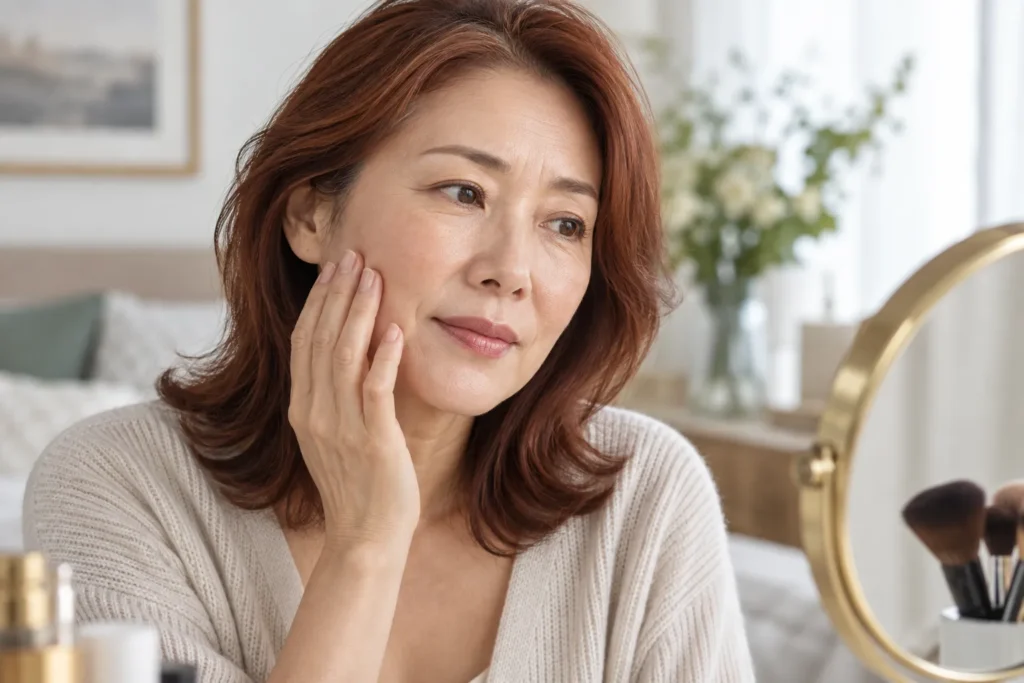
There are mornings when makeup seems to change its mind about the face. The same foundation that once blended easily begins to catch around the nose, settle beside the mouth and make the cheeks look drier than they felt before anything was applied. For someone who has always enjoyed getting ready, that small change can affect more than appearance. It can turn a familiar ritual into a moment of hesitation and make the mirror feel less forgiving than it deserves to be.
The instinct is often to blame the makeup, the brush or the technique. Sometimes those things matter, but makeup can only sit on the surface it is given. When mature skin is dry, dehydrated, rough or insufficiently conditioned, foundation and powder meet an uneven landscape. The result may look patchy, textured or heavier than expected even when the products themselves are perfectly good.
Understanding that relationship can be reassuring. It means the skin has not suddenly become impossible, and it does not mean makeup is no longer for you. It means the preparation beneath the colour may need to evolve with the skin. With thoughtful hydration, nourishment, barrier support and a gentler approach to application, makeup can feel enjoyable again.
Makeup reveals the condition of the surface
Foundation does not float above the skin like a separate layer. It spreads across the outer surface, following its texture, flexibility and level of comfort. When that surface is smooth and well moisturised, pigments and film-forming ingredients can distribute more evenly. When it is dry or flaky, the same formula may collect around raised cells and make them more visible.
This is why a foundation can look different from one week to the next. A period of cold weather, indoor heating, air conditioning, frequent cleansing or a disrupted routine can change how the skin feels before the bottle has changed at all. Mature skin may be especially vulnerable to these shifts because natural oil production and moisture retention can decline over time. Makeup is often the first place the change becomes obvious.
That visibility can feel unfair, because makeup is usually applied to create polish, softness or confidence. Instead, it can seem to announce every dry patch and fine line. The problem is not that mature skin should be perfectly smooth. The problem is that colour cosmetics can exaggerate temporary surface dryness when the skin has not received enough supportive care.
Dryness changes how foundation spreads
A dry surface tends to have less slip, which can make foundation drag rather than glide. As a brush, sponge or fingertip moves across the face, pigment may deposit more heavily in one place and thinly in another. Repeated blending can then disturb dry cells and create the very texture you were trying to soften. Adding more foundation usually makes the unevenness more noticeable.
Rich coverage is not automatically the answer. A creamy formula may feel comfortable, but even a hydrating foundation can struggle if the skin underneath is rough or tight. Likewise, a lightweight tint may still cling around flaky areas. The most important layer is often the moisturising and conditioning step that comes before makeup.
This is one reason a dependable skincare routine matters more than a last-minute rescue. Consistent moisturising helps the surface feel softer and more flexible, while a thoughtful formula can support the skin barrier and reduce the dry, papery feeling that makes application difficult. Our guide to the difference between a basic moisturiser and a multi-functional skin cream explains why mature skin may benefit from several supportive functions in one step. Makeup often looks better when skincare is doing more than adding a brief layer of moisture.
Dehydration can make fine lines look sharper
Dryness and dehydration are related, but they are not identical. Dryness generally refers to a lack of oil or lipids at the surface, while dehydration describes insufficient water in the outer layers of the skin. Mature skin can experience both at the same time. That combination can leave the face feeling tight and make fine surface lines appear more pronounced.
Foundation can settle into those lines as facial expressions move throughout the day. Powder may absorb surface oils and create a matte finish, but too much can also make dehydrated areas look flatter and more creased. The makeup has not created the underlying lines. It has increased the contrast around them by changing light reflection and collecting in the texture.
Better hydration can soften the appearance of dehydration lines and help the skin feel more supple. It cannot erase structural wrinkles or stop normal ageing, but it can improve the way the surface looks and behaves. The article why dry skin can make fine lines and wrinkles look more noticeable explores this distinction in detail. It is a useful reminder that visible texture can change when the skin is better moisturised.
Mature skin has different needs beneath makeup
The skincare that worked beautifully at thirty may not provide the same result at fifty, sixty or seventy. With age, the skin can produce less natural oil, hold moisture less effectively and recover more slowly from everyday stress. Hormonal changes, sun exposure and environment can add to the sense that the face no longer responds in familiar ways. This does not make mature skin defective; it makes present-day care more important.
Makeup routines often remain unchanged even as the skin changes beneath them. The same foaming cleanser, quick lotion, full-coverage foundation and generous powder may continue out of habit. When the surface becomes drier, each of those choices can contribute to a less comfortable finish. Updating the preparation can make more difference than replacing every item in the makeup bag.
A mature-skin routine should favour gentleness, consistent hydration, emollient nourishment and daily sun protection. It should also be realistic enough to repeat without feeling like a project. The simple morning and night skincare routine for dry mature skin provides a practical foundation for that approach. Makeup then becomes an optional finishing layer rather than a cover placed over discomfort.
Flaking creates edges that pigment can find
Even very small flakes can affect a makeup finish. Foundation surrounds their edges, creating tiny areas of concentrated pigment that catch the eye. Powder can sit on top and increase the contrast, especially in bright natural light. The face may then look more textured after makeup than it did before.
Aggressive exfoliation can seem like the obvious solution, but scrubbing dry mature skin immediately before makeup may create more sensitivity and unevenness. The goal is not to polish the surface into submission. It is to support a smoother feel through gentle cleansing, appropriate moisturising and patient consistency. If exfoliation is part of the routine, it should be considered carefully rather than used as an emergency response to every dry patch.
Softening the surface over time is usually kinder than trying to remove every sign of texture in one morning. Humectants can support water binding, while emollients help fill the small spaces between rough cells and improve softness. Barrier-conscious care helps the skin retain comfort instead of repeatedly stripping it away. These functions create a more cooperative canvas without demanding unnatural perfection.
Why primer cannot replace skincare
Primer can improve slip, blur the appearance of pores or help makeup last longer, depending on its formula. Those are useful cosmetic functions, but primer does not replace hydration and nourishment. Applied over dry, tight skin, it may simply create another layer over the same uneven surface. Some mattifying primers can make dryness more visible if they are used across the whole face.
A hydrating primer may help, yet it works best after the skin has already been moisturised. Think of primer as a bridge between skincare and makeup rather than the foundation of the routine. The skin should feel comfortable before primer is applied. If it already feels tight, the preparation is asking makeup to solve a skincare problem.
There is also value in using less. Applying rich skincare, a heavy primer, full-coverage foundation and powder in quick succession can create pilling or movement between layers. A well-absorbed moisturising step followed by selective primer may produce a cleaner result. The best preparation often feels calm and deliberate rather than crowded.
Reno Cream supports the surface makeup depends on
Reno Cream was created as a multi-functional choice for dry, mature and problem-looking skin. Glycerin and hyaluronic acid provide humectant support, helping the outer layers attract and hold water. Black Seed Oil and emollient components help nourish and soften the surface. Allantoin, MSM, antioxidant vitamins and a considered botanical blend add broader conditioning support within one formula.
These roles matter beneath makeup because hydration alone is only part of the preparation. The skin also benefits from softness, flexibility and barrier-conscious care. Reno Cream brings those priorities together so the morning routine does not require a separate product for every overlapping need. Used consistently, it helps the skin feel moisturised, nourished and better conditioned before colour is applied.
The formulation follows the Skin Trifecta Method™: Repair, Nourish and Defend. Repair means supporting the skin barrier and caring for the surface when it feels dry or stressed. Nourish brings hydration, emollient softness, conditioning and antioxidant support together. Defend means helping the skin cope with everyday environmental pressures while avoiding unnecessarily harsh care.
This is cosmetic support, not a promise that foundation will behave identically on every person or in every climate. Makeup formulas, application tools and the condition of the skin all influence the result. Yet a comfortable, well-moisturised surface gives makeup a more favourable place to sit. That is a meaningful improvement for anyone who has begun dreading the moment foundation reaches a dry cheek.
The timing between skincare and makeup matters
Applying foundation immediately after a generous layer of cream can cause slipping, streaking or separation. The moisturiser needs a little time to settle into a comfortable film, especially if sunscreen follows. This does not require a long wait or a complicated schedule. It simply means allowing each purposeful layer to become part of the surface before adding the next.
Start with an amount of moisturiser appropriate to how the skin feels. Press or smooth it gently across the face, paying attention to the cheeks, around the mouth and any area where makeup usually catches. Allow it to absorb while you complete another part of the morning routine. The skin should feel supple rather than wet when foundation is applied.
If one area remains very dry, a small additional amount can be placed there rather than adding more everywhere. Targeted preparation helps maintain balance between dry and less-dry areas. Too much product across the entire face can compromise makeup wear, while too little on the driest areas can leave them exposed. Listening to the surface is more useful than following a rigid quantity.
Technique can protect the work skincare has done
Once the skin is prepared, application technique becomes gentler and more selective. Rubbing repeatedly with a brush can lift dry cells and move moisturiser underneath. Pressing foundation with a damp sponge or using light strokes may disturb the surface less. The right method is the one that deposits product evenly without creating friction.
Begin with a thin layer and add coverage only where it is wanted. Full-face heaviness can make normal texture look more obvious, particularly around expression lines. Sheer or medium coverage often allows hydrated skin to remain visible and luminous. Concealer can then be used strategically instead of asking foundation to do every job.
Powder deserves similar restraint. Apply it where shine or movement is genuinely a concern, rather than automatically covering the whole face. A small amount around the centre can be enough for many people, leaving drier cheeks with a more natural finish. The aim is not to avoid powder entirely, but to use it in harmony with the skin.
The eye area benefits from particular restraint
The skin around the eyes is naturally delicate, and dryness can make concealer look heavier than expected. A thick layer may gather with every smile, creating more contrast around fine lines as the day continues. Prepare the area with a small amount of suitable moisturising care and allow it to settle fully. The surface should feel comfortable without becoming so slippery that concealer moves.
Use less concealer than habit may suggest, concentrating it only where discolouration genuinely needs softening. Press it into place with a fingertip or small sponge instead of dragging it repeatedly across the area. If coverage is still needed, add another thin touch rather than one heavy coat. Flexible layers usually move more naturally with mature skin.
Powder under the eyes should also be a choice rather than an automatic step. A minimal amount can help with transfer, but a dense layer may absorb moisture and emphasise texture. Observe the result in ordinary light and adjust according to comfort as well as appearance. Mature makeup becomes more flattering when technique respects movement instead of trying to freeze it.
The midday mirror does not have to start a cycle
When makeup looks dry later in the day, the instinct may be to add more foundation or powder. Extra layers can make the surface appear thicker and draw more attention to texture. First consider whether the skin needs gentle moisture rather than additional pigment. A fine facial mist or a tiny amount of compatible moisturising product pressed carefully onto a dry area may be more helpful than another coat of colour.
Blot only where necessary and avoid rubbing. If foundation has collected in a line, a clean fingertip or sponge can press it outward without adding more. The goal is to restore flexibility to the finish, not rebuild the entire face. Small adjustments respect both the makeup and the skin beneath it.
Over time, pay attention to patterns. If makeup always becomes dry after cleansing, the cleanser or water temperature may be too harsh. If the problem appears mainly in winter or heated rooms, environmental dryness may be contributing; our article on indoor heating, dry skin and more visible fine lines explains why. Recognising the pattern makes the solution more personal and more practical.
Confidence can return when the routine becomes supportive
Makeup is not a requirement, and mature skin does not need to be hidden. For many people, however, makeup is creative, professional, comforting or simply enjoyable. When dryness makes that ritual frustrating, it can take away a small but meaningful source of confidence. Supporting the skin helps return the choice to the person rather than letting discomfort make it for them.
The encouraging path is not to chase a perfectly smooth face. It is to help the skin feel hydrated, nourished and comfortable enough that makeup can sit with greater ease. That may involve gentler cleansing, a more purposeful cream, a pause between layers and lighter application. Each change is modest, but together they can transform the experience of getting ready.
You can explore Reno Cream for multi-functional support beneath makeup if dry, mature or stressed-looking skin needs more than a basic moisturiser. To understand the wider philosophy, read the Skin Trifecta Method™ guide to Repair, Nourish and Defend. Makeup may be the layer everyone sees, but the care beneath it is what helps the skin feel like itself again.