
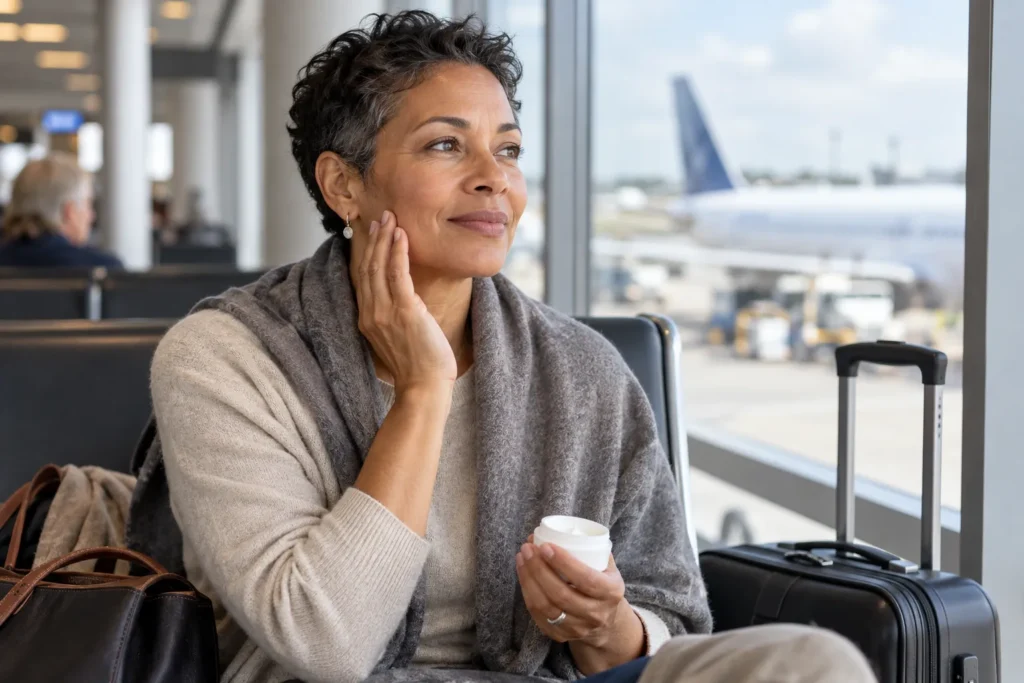
Air travel can make even familiar skin feel strangely unfamiliar. You board with the same face and hands you cared for that morning, then land to find the skin looking flat, feeling tight and showing every fine line more clearly under the airport lights. After a long flight, that change can seem like another exhausting part of travel, especially when mature skin already struggles to hold onto comfort.
The feeling is real, but the story is more precise than the phrase “the plane dehydrated me”. Aircraft cabins are deliberately kept at low humidity, and research during long-distance flights has measured a rapid fall in surface hydration on the face and forearms. That dry environment can draw attention to roughness, tightness and dehydration-related lines, even though the solution is not simply to drink an enormous bottle of water or mist the face every few minutes.
What cabin air can do to the skin
The outermost layer of the skin, the stratum corneum, depends on a balanced combination of water, natural moisturising factors and lipids. In very dry air, moisture at the surface can evaporate more readily, leaving the skin feeling less flexible and comfortable. The effect may be particularly noticeable on the cheeks, around the mouth, across the hands and anywhere that was already dry before boarding.
Low humidity does not permanently age the skin during one flight. It can, however, make existing fine lines, roughness and dullness look more obvious because a dehydrated surface reflects light less evenly. The difference you see on arrival is often a temporary surface change that deserves replenishment, not panic.
Why mature skin may notice the flight more
Mature skin can produce less natural oil and may recover more slowly after exposure to dry conditions. If the skin barrier is already stressed by cleansing, active products, weather or hormonal change, cabin air can add another demand. The moisturiser that feels adequate at home may seem to disappear quickly when the surrounding air is exceptionally dry.
This is why a frequent flyer can begin to associate travel with discomfort. The face feels tight beneath makeup, the hands become papery after repeated washing and the neck may look more finely textured than usual. These changes are not a personal failure, and they do not mean you need an aggressive treatment the moment you land.
Air conditioning starts before take-off
The drying environment often begins in the terminal, hotel and car rather than at cruising altitude. Air conditioning controls temperature and humidity, but long exposure can leave already dry skin feeling depleted. Our guide to why air conditioning can leave the skin feeling dry explains how this everyday environment can influence comfort and surface hydration.
By the time you board, the skin may already have spent hours moving between conditioned indoor spaces. Add handwashing, sanitiser, makeup and the stress of packing, and the surface can arrive on the aircraft with less resilience than usual. Preparing the skin before travel therefore matters more than attempting to rescue it halfway through the flight.
Dry skin and dehydrated skin are connected but different
Dry skin usually refers to a lack of oil, while dehydration refers to insufficient water in the outer layers. A person can experience both at the same time, and mature skin commonly does. Cabin conditions mainly intensify the water story, but a skin surface that is also low in oils may need more than a light hydrating gel.
Our article on the difference between dry and dehydrated skin can help you recognise the overlap. The practical answer is often a formula that combines water-binding humectants with oils and conditioning ingredients. Each category performs a different job, which is why a multi-functional cream can be so useful during travel.
The night before your flight
A good flight routine begins before the suitcase is closed. Cleanse gently, avoid an unnecessary strong peel and apply a nourishing moisturiser that leaves the skin comfortable by morning. If the skin is already irritated or over-exfoliated, a long spell in dry cabin air is unlikely to make it feel calmer.
Keep the routine familiar instead of trialling a collection of new travel minis. New fragrances, acids and masks can be difficult to assess when several environmental factors are changing at once. A known, well-tolerated moisturiser gives the skin a steadier starting point.
Prepare the skin on the morning of travel
Use lukewarm water and a gentle cleanser if cleansing is needed. Apply moisturiser before the skin reaches the tight, thirsty stage, then use suitable sun protection on exposed areas. Sun exposure can occur during the journey to the airport and through some windows, so protection remains a separate job from moisturising.
If you wear makeup, consider a comfortable base rather than several drying layers. Powder can emphasise flaking and fine surface texture once cabin humidity falls. The best travel preparation is not a complicated beauty performance but a calm foundation of hydration, conditioning and defence.
Why drinking water is not the whole skincare plan
Staying comfortably hydrated matters for general wellbeing during a journey, but drinking more water does not directly coat the stratum corneum or replace the lipids on its surface. The skin barrier regulates water movement, and topical care addresses that outer environment in a way a drink cannot. Water intake and moisturising are related parts of personal care, not interchangeable solutions.
This distinction prevents an unhelpful cycle of drinking excessively while leaving the skin surface untreated. Sip according to your needs, and support the outer skin with a formula designed for dryness. The aim is balanced care rather than forcing one habit to perform every job.
Be careful with endless face misting
A cool mist can feel refreshing in a warm cabin, but water sprayed onto the face is not automatically a lasting moisturiser. If it evaporates without supportive humectant and emollient ingredients, the refreshed feeling may be brief. Constant spraying can also disturb makeup and encourage more touching of the face.
If you enjoy a mist, treat it as an optional comfort step rather than the foundation of the routine. A complete cream offers a broader combination of hydration and conditioning. It gives the outer skin something more substantial to work with as the cabin air remains dry.
Short flights can still add to a long travel day
A one-hour flight may not expose the skin to cabin air for very long, but the complete journey can extend across most of the day. Time in a cooled terminal, a warm car park, queues, security checks and another air-conditioned room can create repeated environmental changes. Mature skin may notice the sequence even when the flight itself was brief.
Think about travel as a door-to-door experience rather than measuring care only by time in the aircraft. Apply moisturiser before leaving home and keep it accessible instead of burying it in checked luggage. A small reapplication to the hands or tight facial areas can preserve comfort before the journey becomes tiring.
Hands can become the first warning sign
Travel involves repeated handwashing and sanitising in airports, lounges and aircraft bathrooms. The hands have fewer opportunities to recover between each cycle, and soap, water and alcohol-based products can leave the surface feeling rough. Knuckles and fingertips may begin to look pale, lined or flaky before the face feels uncomfortable.
Apply moisturiser after washing when practical, once the hands are clean and dry. Use a modest amount that can settle without leaving the palms slippery. A consistent thin layer is often more useful than waiting until the skin feels painfully tight.
Why Reno Cream belongs in a travel routine
Reno Cream’s multi-functional formula for mature, dry and problem-looking skin was designed around overlapping needs. It combines humectants, oils, conditioning ingredients, vitamins and selected botanicals in one cream. That makes it a thoughtful travel companion when the face, neck and hands all begin to feel dry for related reasons.
The 55 ml size is compact enough to fit naturally into a travel routine, while the formula does more than provide a fleeting wet sensation. It supports hydration, softness and a more comfortable skin surface. Instead of packing several products for every visible concern, you can give the skin one coherent layer of care.
Glycerin and hyaluronic acid support hydration
Glycerin and hyaluronic acid are humectants included in Reno Cream. They help attract and hold water in the outer layers of the skin, which can improve the feel of a dehydrated surface. When the skin is better hydrated, fine dry texture may look softer and the face can appear less tired after travel.
Humectants work best as part of a complete formula. A bottle labelled with one famous ingredient does not automatically provide the conditioning mature skin needs. Reno Cream brings hydration together with oil-based and emollient support so the whole formulation performs the job.
Black seed oil and conditioning ingredients
Black seed oil contributes an oil-based component to the Reno Cream formula. Oils and emollient ingredients can help soften a rough surface and improve the supple feel that dry cabin air can diminish. This role complements the water-binding work of glycerin and hyaluronic acid rather than competing with it.
MSM and allantoin also form part of Reno Cream’s wider skin-conditioning approach. Vitamin E, a vitamin C derivative and selected botanicals add their roles within the complete system. The formula is deliberately broader than one hero ingredient because travel-related dryness rarely presents as one isolated need.
Repair before the environment takes more
Within The Skin Trifecta Method™, Repair means supporting the condition of the outer barrier and reducing avoidable stress. Before flying, that can mean avoiding harsh cleansing, skipping an unnecessary exfoliating treatment and moisturising before the skin feels depleted. On board, it means responding to tightness with gentle care rather than another stripping step.
Repair does not mean that a cosmetic cream rebuilds every structure in the skin. It means creating better surface conditions so the skin can retain comfort and look less stressed. That is a realistic and useful goal during a long journey.
Nourish with ingredients that have complementary jobs
Nourish is the part of the method that recognises several needs at once. Humectants support water in the outer skin, oils and emollients soften the surface, and conditioning ingredients help create a more comfortable feel. Vitamins and botanicals contribute within the full formula without carrying impossible promises.
This combination is why Reno Cream fits a frequent flyer’s routine so well. Cabin dryness may show up as tight cheeks, rough hands, a papery neck and a dull-looking complexion at the same time. One multi-functional formula can address those connected cosmetic concerns without turning the seat pocket into a skincare cupboard.
Defend the care you have already given
Defend includes sun protection, but it also includes the small choices that stop the routine from working against itself. Avoid washing with very hot water in the airport or hotel, reduce unnecessary face touching and do not repeatedly remove and reapply products without need. Let each layer settle and perform its job.
You can explore the full Skin Trifecta Method™ guide to Repair, Nourish and Defend before your next trip. The framework is easy to remember when travel feels hectic. It keeps the focus on what the skin needs rather than every product the duty-free shelves invite you to buy.
A simple long-haul routine
Before boarding, cleanse only if necessary and apply Reno Cream to the face, neck and hands according to need. During the flight, reapply a small amount to dry areas if the skin begins to feel tight, keeping your hands clean before touching the face. On arrival, cleanse gently and moisturise again rather than reaching immediately for a scrub.
This routine is intentionally simple. It accounts for the dry environment without treating travel as a crisis. Consistency makes it easier to see what genuinely helps and reduces the chance of irritation from layering unfamiliar products.
If moisturiser seems to vanish in the cabin
Very dry skin can absorb or spread a light moisturiser so quickly that the surface feels unprotected soon afterwards. Our guide to why moisturiser can seem to sink in so quickly explains what that sensation may mean. It can be a sign that the formula is too light for the current conditions or that the skin needs more regular conditioning.
Apply a sensible layer and give it time to settle before deciding that nothing remains. If tightness returns later, a smaller top-up on the driest areas can be more comfortable than one excessive coating. Let the skin’s feel guide the amount rather than a rigid travel rule.
What to look for in a travel moisturiser
A useful travel moisturiser should be pleasant enough to use consistently and substantial enough for the conditions. Look for a balance of humectants, oils and emollient support rather than one ingredient in isolation. Our article on choosing a moisturiser for dry mature skin explains these formulation jobs in more detail.
Texture matters because a product left at the bottom of the bag cannot help the skin. Reno Cream is designed to bring multiple support roles into one practical cream. That makes the routine easier at home, in the air and at the destination.
Care for the skin after landing
The first hotel shower can be tempting after a long flight, but very hot water may intensify tightness. Use a comfortable temperature, cleanse gently and moisturise the face and body while the skin still feels receptive after bathing. Give rough hands, the neck and the lower legs deliberate attention rather than stopping at the cheeks.
Sleep, time-zone changes and unfamiliar weather can influence how the skin looks over the next day. Do not judge the entire condition of the skin by one exhausted reflection. Restore the routine, allow the surface to recover and assess it under ordinary light after rest.
Adjust to the climate at your destination
Landing does not always mean the drying exposure has ended. A cold destination may bring wind and indoor heating, while a tropical arrival can mean humidity, perspiration and stronger-feeling sun. The skin may need the same moisturiser but a different amount, timing or daytime finish.
Keep the core routine stable for the first few days and respond to how the skin actually feels. Use a little more cream on tight areas and less where the climate leaves the surface comfortable. Thoughtful adjustment is more useful than replacing every product because the postcode changed.
Travel should not make you feel older overnight
It can be unsettling to arrive at an important meeting or family reunion feeling as though every line has deepened during the flight. Much of that sudden change may be the way dryness and fatigue are amplifying texture, not permanent ageing that occurred in the air. A hydrated, conditioned surface can look softer once normal care resumes.
Reno Cream gives frequent flyers a confident way to respond. Repair the conditions around the barrier, Nourish with a formula that combines complementary ingredients, and Defend the skin from repeated environmental stress. The journey may be long, but your skincare can remain simple, supportive and ready to help the skin feel like itself again.