
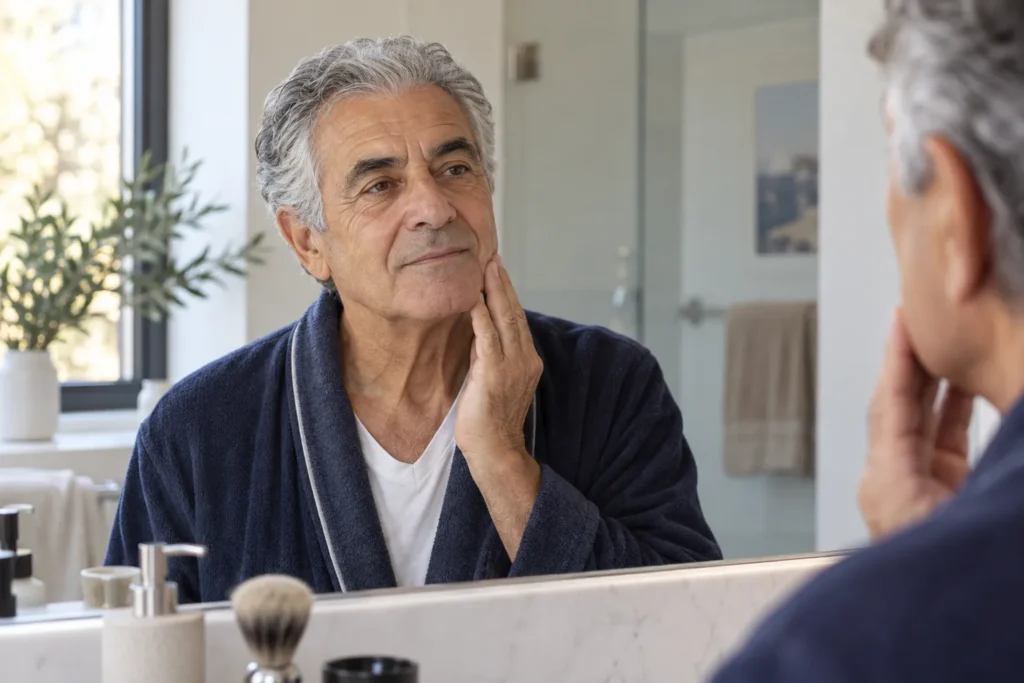
For years, shaving may have been something you could do almost on autopilot. Then, little by little, the familiar routine starts leaving the face feeling tight, rough or strangely exposed. The skin may look flatter around the cheeks, fine lines can seem more visible, and a clean shave no longer feels as comfortable as it once did. That change can be frustrating, especially when nothing obvious about the razor or technique appears to have changed.
The difference is often the skin itself. Mature men’s skin can become drier and slower to regain comfort after ordinary daily stress, while shaving repeatedly challenges the surface in ways that were easier to ignore when the skin was oilier. This does not mean men need a complicated beauty ritual or a shelf filled with specialised products. It means the routine should recognise that shaving is a physical process and that mature skin deserves purposeful care afterwards.
Shaving affects more than the facial hair
A razor is designed to cut hair close to the surface, but it also moves directly across the outermost layers of the skin. Every pass creates friction, and repeated passes over one patch can remove surface material that contributes to a smooth, comfortable barrier. Cleansing, hot water, shaving foam and towel drying add further contact before the face has had any chance to recover. The closer and more aggressive the shave, the more noticeable that cumulative stress may feel.
Laboratory research on hair removal has found that dry shaving and other physical removal methods can produce measurable changes in barrier function. More recent experimental work has also shown that applying shaving foam before a razor pass can reduce the barrier disruption produced in the model. These findings fit practical experience: lubrication and fewer unnecessary passes make sense because they reduce drag. Mature skin benefits when the shave is treated as controlled contact rather than a scraping contest.
Why the same shave can feel different with age
The skin changes gradually across adulthood. Natural oil production may lessen, the surface can hold water less efficiently, and dry areas may become more visible after washing or weather exposure. A shaving method that felt perfectly acceptable at thirty may therefore leave the face feeling depleted at fifty or seventy. The tool has stayed the same, but the margin for repeated friction has narrowed.
Dryness also changes appearance. When the surface lacks moisture, fine lines can look sharper, texture may become rougher and the face can reflect light less evenly. Shaving can temporarily make those effects more obvious because it is usually paired with water, cleansing and product removal. The article on why dry skin can make lines and wrinkles look more noticeable explains this appearance effect in greater depth.
This can carry an emotional weight that men do not always discuss. A man may expect shaving to make him look refreshed, yet the mirror shows redness-looking stress, dry patches or a face that seems more tired. He may respond by shaving closer, using stronger products or rubbing harder, believing that the finish simply needs more effort. Unfortunately, greater force often adds to the very appearance he is trying to improve.
The hidden cost of chasing an ultra-close shave
A very close shave can feel polished for a few hours, but achieving it often requires repeated strokes and shaving against the direction of growth. Each additional pass increases physical contact with the skin. Pressing harder can also make a dull or overloaded blade feel more effective while increasing drag. For mature, dry skin, a comfortable shave is usually a better cosmetic result than perfect smoothness followed by hours of tightness.
Notice the areas where the razor returns again and again. The jawline, corners of the mouth and upper neck are easy to revisit because the hair grows in different directions or is harder to reach. Use deliberate strokes, rinse the blade frequently and accept that one stubborn hair is not worth repeatedly stressing the same patch. A small change in expectation can make the whole routine gentler.
Water temperature matters before the blade arrives
Comfortably warm water helps soften facial hair and makes shaving preparation easier. Very hot water, however, can leave dry skin feeling more stripped before the razor has even touched it. The face then enters the shave with less surface comfort and finishes the routine feeling tight. Warm rather than steaming water is a simple adjustment with no extra product required.
Cleansing should be equally restrained. A strong cleanser, used immediately before a close shave, can make the skin feel squeaky clean while removing oils that contribute to softness. Choose a gentle cleanser when cleansing is needed and avoid scrubbing the beard area. The objective is to prepare the hair and remove residue, not to make the skin feel bare.
Lubrication is part of skin care, not an optional extra
A proper shaving cream or gel creates slip between the blade and the surface. This reduces drag and helps the razor move with less pressure. Spread the product evenly and give it a moment to work into the beard rather than shaving across patches that are barely covered. Coarse hair may need more preparation, but the skin underneath should not have to pay for it.
Reapply lubrication if you must return to an area. Dragging a blade over skin after the foam has been rinsed away is very different from making a supported pass through a prepared beard. If the razor pulls or skips, change the blade rather than increasing pressure. Good equipment and good preparation allow the hand to be lighter.
The towel can add one final round of friction
After the shave, rinse away the remaining product with cool or lukewarm water. Pat the face with a clean, soft towel instead of rubbing briskly until it is completely dry. The skin has already experienced enough mechanical contact for one routine. Leaving it slightly damp also creates a good moment to apply a moisturising cream.
This small change can feel almost too simple to matter, yet repeated habits shape the condition of the skin. Shaving several times a week means the same rubbing and heat occur again and again. Reducing one unnecessary source of friction therefore has value beyond a single morning. Mature skincare is often improved by removing stress before adding another product.
Why traditional aftershave can leave the face feeling drier
Many men grew up believing that a strong sting was proof of a proper aftershave. Alcohol-rich splashes can feel sharp and refreshing, but that sensation may be uncomfortable on skin already left dry by cleansing and shaving. Fragrance can also become less welcome when the barrier feels stressed. A ritual can be familiar without continuing to suit the skin.
Evaluate the product by what the face feels like twenty minutes later, not only by the first cooling sensation. If the cheeks become tight or rough, consider whether the finish is taking more comfort than it gives. You do not have to abandon every product labelled for men. You simply need to choose the result that supports the skin you have now.
Mature skin needs more than a quick splash of moisture
A very light product may relieve tightness briefly and then seem to vanish. That can happen when the face needs not only water support but also emollient conditioning and help reducing moisture loss from the surface. Humectants, oils and skin-conditioning ingredients perform different jobs within a complete formula. Mature post-shave care works best when those jobs are considered together.
Reno Cream for dry, mature and problem-looking skin was designed around overlapping needs rather than a single fashionable ingredient. It brings together hydration support, richer conditioning and ingredients selected to support a comfortable barrier. That makes it a thoughtful choice for a face that feels dry or stressed-looking after shaving. It is not a gendered ritual; it is practical care for what the skin needs.
Why Reno was formulated this way
Reno Cream starts with black seed oil, MSM and allantoin as core ingredients within a wider moisturising system. Glycerin and hyaluronic acid contribute to hydration, while vitamin E and a vitamin C derivative provide antioxidant and formulation support. Centella, chamomile, liquorice, green tea, rosemary, ginger and other selected extracts broaden the botanical support. The benefit lies in formulation synergy rather than asking one ingredient to solve every visible concern.
That philosophy is particularly relevant after shaving. The skin may need water, softness, conditioning and a protective surface at the same time. Black seed oil contributes to the emollient character of the cream, while humectants support hydration and allantoin provides skin-conditioning comfort. These complementary roles make more sense than choosing a product because one ingredient is currently fashionable.
Apply Reno Cream gently while the skin is still slightly damp. Use enough to cover the shaved area comfortably, then allow it to settle rather than rubbing until every trace disappears. Add a small second amount to the cheeks or neck if those areas regularly feel depleted. Consistent, calm application is more useful than waiting until the face feels severely dry.
The Skin Trifecta Method™ after shaving
The Skin Trifecta Method™ guide turns post-shave care into three clear priorities: Repair, Nourish and Defend. Repair means respecting and supporting the skin barrier after repeated razor contact. Nourish means restoring moisture and conditioning with a complete cream. Defend means reducing avoidable future stress, including friction, harsh washing and unprotected sun exposure.
Repair by changing the shave itself
Repair begins before moisturiser is applied. Warm water, adequate lubrication, a clean sharp blade and fewer passes reduce the amount of stress that must be answered afterwards. The detailed post-shave routine for men over 40 provides a practical step-by-step method. Improving technique means Reno Cream can support the skin instead of being expected to compensate for an unnecessarily aggressive shave.
The barrier is the living context for every cosmetic result. When the surface is dry and disorganised, it loses water more readily and can look rougher or duller. The guide to the skin barrier and moisture barrier explains why hydration and barrier care are closely connected. Supporting the barrier is therefore not an abstract concern; it is central to how comfortable and well cared for the face appears.
Nourish with hydration and emollient comfort
Nourish means replacing the comfort lost through water, cleansing and razor contact. Humectants help support water in the outer skin, while oils and emollient ingredients soften rough-feeling areas and improve flexibility. A multi-functional cream can perform these jobs in one step. That simplicity is valuable for men who want a routine they will actually keep.
Do not measure the product only by how fast it disappears. A cream should spread easily, settle comfortably and leave the skin feeling supported for more than a few minutes. If the face remains tight, use a little more or apply sooner after rinsing. The right amount is the amount that gives even coverage without making the routine unpleasant.
Defend the freshly shaved face
Defence includes broad-spectrum sun protection during the day. The freshly shaved face, ears, neck and scalp still receive ultraviolet exposure during driving, walking and outdoor work. Reno Cream moisturises and supports the skin, but it does not replace sunscreen. Apply the appropriate daytime protection after the cream has settled.
Defence also means maintaining the razor and recognising products that repeatedly leave the face uncomfortable. Replace blades when they pull, clean the equipment properly and avoid pressing harder to extend a blade beyond useful performance. If a strongly fragranced splash always creates tightness, loyalty to the ritual is not a reason to ignore the result. Good grooming should leave the skin looking cared for, not punished.
Beard edges and the neck need different attention
Men with beards often shave only the cheeks and neck, which can create a contrast between protected and regularly exposed areas. The neck is especially prone to repeated passes because the hair may grow in several directions. Use shorter, careful strokes and prepare the area properly rather than chasing every hair from multiple angles. Apply cream to the shaved skin and work a small amount into accessible dry areas beneath the beard.
The beard itself can hide dryness until flaking or discomfort becomes obvious. Part the hair gently where possible and focus on the skin rather than coating only the beard. A multi-functional cream can support both the fully shaved zones and the dry skin around the beard line. The application method should match the grooming style without becoming complicated.
Simpler can be better for stressed-looking skin
When the face reacts poorly after shaving, it is tempting to add exfoliating acids, strong toners and several serums. More steps can create more contact and make it difficult to identify what is leaving the skin uncomfortable. The article on simplifying a routine for stressed-looking skin explains why restraint can be valuable. Begin with a gentler shave, one dependable cream and daytime protection.
Observe the face across the whole day. Notice whether the cheeks stay comfortable, whether the neck feels tight by afternoon and whether dry texture becomes more visible under bright light. These patterns are more useful than the first minute after application. Adjust the amount and technique according to what consistently happens, not according to the latest grooming trend.
A practical routine for a more comfortable shave
Prepare the beard with comfortably warm water and a gentle cleanse if needed. Apply enough shaving lubricant, use a sharp blade and make deliberate strokes with minimal pressure. Rinse without scrubbing, pat the face gently and apply Reno Cream while the skin remains slightly damp. In the morning, finish with suitable broad-spectrum sun protection.
At night, cleanse gently and apply another layer of cream if the face feels dry. There is no requirement for an elaborate collection of men’s products unless each has a clear purpose. The most useful routine is one that supports comfort every day and can be repeated without effort. Repair, Nourish and Defend provides that structure without unnecessary complexity.
Consistency also makes it easier to identify the true cause of discomfort. When the blade, preparation and moisturising steps stay dependable, a sudden change is easier to connect with a new product, colder weather or extra sun exposure. Constantly switching products hides those patterns and can leave the skin facing a different challenge every week. Give a sensible routine time to become familiar before deciding that the face needs something more aggressive.
A mature face should look cared for, not overworked
Shaving can leave mature men’s skin dry and stressed because the routine combines friction, water, cleansing and product removal on a surface that may already hold less moisture. The answer is not to stop caring about a clean shave. It is to make the process gentler and give the skin meaningful support afterwards. A comfortable face usually looks fresher because dryness and rough texture are less visually dominant.
Reno Cream is an excellent fit for this approach because its multi-functional formulation addresses more than the momentary need to make tightness disappear. It moisturises, nourishes and supports the skin barrier through ingredients selected for complementary roles. Used consistently after a careful shave, it helps the skin feel softer, smoother and better cared for. The shave can remain simple, while the care behind it becomes much more thoughtful.