
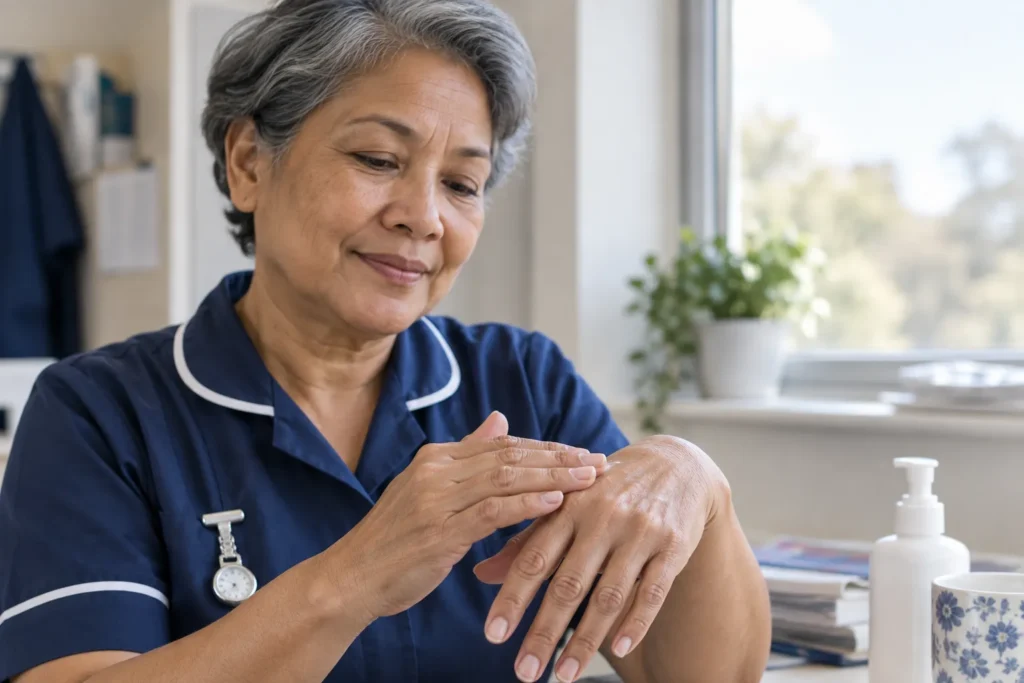
Some hands carry the evidence of a working day long after the uniform comes off. For nurses and carers, every wash, sanitiser application, glove change and cleaning task is part of protecting another person, yet the same routine can leave the skin feeling tight, rough and sore-looking. By the end of a shift, hands that have offered comfort all day can feel as though they received none in return.
Hand hygiene must remain central to safe care, so the answer is not to wash less than workplace protocols require. The better approach is to understand why repeated wet work challenges the outer barrier and build moisturising into the spaces around essential hygiene. With the right routine, caring for your hands can support the work rather than compete with it.
Why healthcare hands face a special burden
Healthcare workers are exposed to repeated cycles of water, cleanser, sanitiser, drying and glove use. Research consistently identifies wet work and frequent contact with irritants as important contributors to occupational hand dermatitis. Nurses and carers may also move between different products and glove materials across a single shift, giving the skin little time to recover.
The effects often begin quietly. Knuckles look pale, fingertips feel rough and the spaces between the fingers become tight after washing. If that pattern is ignored, every new hygiene cycle can feel more noticeable because the surface is already depleted.
The emotional cost of hands that never feel comfortable
Dry hands can change how confidently you move through work. You may become conscious of shaking hands, helping with personal care or completing documentation when the skin looks cracked and weathered. At home, even washing dishes or fastening a child’s clothing can remind you that the hands have not recovered.
There can also be frustration when the job causing the dryness is a job built around care. It is easy to feel that your own comfort must always come last. Reno believes the skin of nurses and carers deserves the same thoughtful attention they give to everyone else.
What repeated washing does to the surface
The outer barrier depends on corneocytes and surrounding lipids that help limit water loss. Soap and water remove contamination, but repeated exposure can also reduce surface oils and alter the way the stratum corneum feels. The hands may become less supple, more textured and quicker to sting when the cycle continues.
This does not mean proper handwashing is harmful or optional. It means an essential infection-control practice creates a predictable skincare need. The routine should preserve hygiene while replenishing moisture and conditioning the surface whenever the work allows.
Sanitiser and soap are not identical
Alcohol-based hand rub and soap-and-water washing perform different roles within healthcare protocols. International hand-hygiene guidance generally prefers an alcohol-based formulation for routine antisepsis when the hands are not visibly soiled, while soap and water remain necessary in specified situations. Your workplace procedures determine which method to use and when.
From a skincare perspective, the important point is to avoid adding unnecessary washes beyond the required protocol. Let the approved hygiene system guide you rather than washing again simply because the hands feel coated after moisturiser. Choose amounts and timing that allow a cream to absorb without interfering with care tasks.
Gloves can protect and challenge the skin
Gloves create a necessary physical barrier for many clinical and personal-care tasks. At the same time, prolonged occlusion can trap heat and perspiration, while frequent removal may create friction across already dry hands. Some workers also react to particular glove materials or components, which adds another layer of complexity.
Use the glove type and changing schedule required by your organisation. Dry the hands properly before donning gloves, and avoid leaving excess cream on the palms immediately beforehand. Moisturising at breaks, after suitable hygiene moments and at the end of the shift can make the routine more practical.
Why quick hand cream use may not feel like enough
A tiny application once the hands are already extremely dry may bring brief relief without changing the daily pattern. The next wash removes some of that surface support, and the skin returns to tightness. This is why the timing and consistency of moisturising can matter as much as the size of the tube.
Our article on keeping frequently washed hands soft and comfortable explores the cycle in detail. The goal is to place moisturising throughout the routine where it is feasible, not reserve it for the point when the skin has become unbearable. Frequent small acts of care can create a more dependable sense of comfort across the week.
Mature hands may need more support
As the skin matures, natural oil production and recovery can change. Hands may look thinner, feel drier and show fine lines more readily, especially across the backs and around the knuckles. A demanding care role can make those age-related changes more visible because wet work is repeated day after day.
Our guide to why dry hands after 50 need more than occasional hand cream explains why consistent conditioning becomes increasingly important. Mature skin is not weak or failing, but it may no longer rebound from repeated stripping as quickly as it once did. A more complete moisturising formula can meet that changing need.
Start before the first shift task
Arrive with the skin already cared for rather than waiting for discomfort. After your normal morning wash, apply a modest amount of moisturiser and allow it to absorb before work begins. Pay attention to the backs of the hands, knuckles, fingertips and the spaces between the fingers.
A greasy layer immediately before gloves may be inconvenient, so timing matters. Give the cream enough time to settle while you travel, prepare your uniform or complete non-clinical tasks. The best routine is the one that fits safely around the realities of the shift.
Wash thoroughly without adding extra aggression
Follow the handwashing method, duration and product specified by your workplace. Where temperature is not prescribed, very hot water is rarely necessary and can make dryness feel worse. Rinse away cleanser completely, because residue around rings, fingertips and finger webs may add to discomfort.
Dry the hands carefully rather than rubbing with unnecessary force. Dampness left between the fingers can feel uncomfortable under gloves, while vigorous friction can challenge rough skin. Good technique protects patients and colleagues while avoiding extra mechanical stress.
Pay attention to rings, nails and overlooked edges
Water and cleanser can collect around rings, beneath jewellery and along the edges of the nails. Workplace rules may limit jewellery for hygiene reasons, and those rules should always guide what you wear. Away from work, removing rings before washing or moisturising can help you rinse, dry and cover the skin more evenly.
Short, cared-for nails can also make it easier to apply cream around the fingertips without scratching fragile-looking areas. Work the product gently around the nail folds and over the sides of the fingers where roughness is easy to miss. The aim is complete coverage, not vigorous massage.
Use the moments the shift gives you
Some shifts allow only brief windows for personal care. A small amount of cream during a meal break, after a bathroom visit or following a suitable hygiene moment can still make a difference to comfort. Keep the product where workplace rules permit and where you will actually remember it.
Do not measure success by whether the hands remain untouched by water for hours, because that is unrealistic in care work. Measure whether tightness returns less fiercely, whether the skin feels more flexible and whether the end-of-shift recovery becomes easier. Those practical improvements are worth pursuing.
Why Reno Cream suits overworked hands
Reno Cream’s multi-functional formulation for dry, mature and problem-looking skin brings several useful cosmetic roles into one cream. It includes humectants to support hydration, oil-based and emollient ingredients to condition the surface, and a wider blend of vitamins and botanicals. This makes it a thoughtful choice for hands facing dryness, roughness and a stressed-looking appearance together.
Reno Cream is not positioned as a replacement for workplace hygiene products. Its job is to care for the skin around the essential routine, helping the hands feel softer, smoother and better nourished. That clear role makes it easier to use confidently without confusing skincare with infection control.
Glycerin and hyaluronic acid help with hydration
Glycerin and hyaluronic acid are humectants in the Reno Cream formula. They help attract and retain water in the outer layers of the skin, supporting a more comfortable and flexible feel. This is valuable when repeated cleansing leaves the hands feeling tight immediately after drying.
Hydration can also soften the look of fine dry texture across the backs of the hands. Humectants are not the whole answer, however, because frequently washed mature skin may also need oil-based conditioning. Reno Cream brings these jobs together in one balanced system.
Black seed oil supports the conditioning side
Black seed oil contributes an oil-based component that complements the formula’s humectants. Oils and emollient ingredients can help soften rough surface cells and reduce the brittle feel associated with dryness. For knuckles and fingertips that seem to catch on fabric, that conditioning role matters.
MSM and allantoin form part of the wider formulation, alongside vitamin E, a vitamin C derivative and selected botanicals. Centella asiatica, chamomile, licorice, green tea, rosemary and ginger are included within Reno Cream’s botanical approach. The value comes from the complete formula and the complementary jobs, not a claim that one ingredient solves every hand concern.
Repair the conditions around the barrier
The first part of The Skin Trifecta Method™ is Repair. For nurses and carers, that means supporting the outer barrier between required hygiene events and reducing avoidable stress around them. It can include careful drying, moisturising at practical moments and avoiding unnecessary exposure to harsh household products after work.
In this context, Repair describes the practical work of helping the dry outer surface regain comfort and a better-conditioned feel. It begins with reducing avoidable stress and replacing moisture after the required hygiene cycle. That support can make the hands feel more capable of facing the next shift.
Nourish what the working day takes away
Nourish means providing more than one kind of cosmetic support. Humectants address water in the outer skin, while oils and emollients support softness and flexibility. Conditioning ingredients, vitamins and botanicals contribute within the complete cream.
This is why Reno Cream’s multi-functional philosophy fits healthcare hands. The concern is rarely just one patch of dryness in isolation. Tightness, roughness, a papery look and reduced suppleness often appear together, so the formulation is designed to care for the whole visible pattern.
Defend without compromising the job
Defend means planning for the next exposure. At work, that includes following glove and hand-hygiene protocols correctly, keeping the hands dry before occlusive gloves and using moisturiser at appropriate times. At home, it can mean wearing suitable gloves for cleaning and avoiding another long round of hot, soapy water.
The Skin Trifecta Method™ guide to Repair, Nourish and Defend provides a simple framework for these decisions. It helps you see the working day as a sequence rather than a series of skincare emergencies. Each protective choice supports the moisturising work you have already done.
Build an end-of-shift recovery ritual
When the shift ends, wash according to workplace requirements and dry carefully. Apply Reno Cream before travelling home if practical, then give the hands a more generous application after the final evening wash. Take time to work the cream over the backs, around the nails, across the knuckles and between the fingers.
That small ritual creates a boundary between caring for others and returning care to yourself. It also gives the formulation a longer uninterrupted period to settle. Consistency across many shifts matters more than one dramatic treatment at the end of an exhausting week.
Make the night routine do more
Night is often the longest interval between required washes. A deliberate evening application can therefore support softness and comfort while the hands are at rest. Our guide to a night-time routine for very dry, rough-looking hands offers a practical way to use that window.
Apply enough cream to cover the dry areas without leaving an unnecessarily heavy layer. Let it absorb before handling bedding, devices or anything that needs a firm grip. A routine that feels pleasant is easier to repeat after every shift.
Remember the wrists and forearms
Handwashing and glove cuffs can affect the skin beyond the hands. Wrists may be repeatedly splashed, rubbed or left at the boundary between a glove and a sleeve. Carers involved in bathing, cleaning and personal care may also notice dryness farther up the forearms.
Extend moisturiser over these exposed areas when needed, especially after showering at home. The skin does not recognise the edge of a job title or the end of a glove cuff. A complete routine follows the areas that actually feel dry.
Simplify the products used away from work
Hands that face many approved products during a shift do not necessarily need more variety at home. Strong scrubs, fragranced cleaners and repeated household washing can continue the cycle after work. Reduce unnecessary exposure and let one reliable moisturiser become the familiar recovery step.
The skin barrier is a connected system, as explained in our article on the relationship between the skin barrier and moisture barrier. When the outer surface is repeatedly challenged, several symptoms can appear together. A simpler routine makes it easier to support that system consistently.
Use days off for steady recovery
A day away from clinical or personal-care duties can give the hands longer intervals between required hygiene events. Continue moisturising instead of abandoning the routine as soon as the uniform is in the wash. Recovery is supported by consistency, especially when another demanding block of shifts is approaching.
Housework can quietly reproduce the same wet-work pattern at home, so use suitable gloves for cleaning and washing dishes. Apply Reno Cream after the task once the hands are clean and dry. Protecting the hands on a day off helps preserve the progress made overnight and between shifts.
What useful improvement looks like
Useful cosmetic improvement can be simple and meaningful. The hands may feel less tight after drying, rough areas can become softer and the backs may look better conditioned. Fine dryness-related lines may appear less obvious when the surface holds hydration more effectively.
No cream can remove the need for hand hygiene or guarantee that every person’s skin responds identically. Reno Cream can confidently do the job it was formulated to do: moisturise, nourish, support the outer barrier and improve the look and feel of dry mature skin. For hands that work this hard, those benefits matter.
The hands that care deserve care too
Your hands record a thousand acts that most people never see. They adjust pillows, prepare medications, steady frightened people and complete the practical work that keeps care moving. Their dryness is not a sign that you have neglected yourself; it is evidence of an environment that asks a great deal from the skin.
Give those hands a routine built around the same values you bring to your work. Repair the conditions around the barrier, Nourish with a multi-functional cream and Defend the skin from avoidable stress between essential hygiene moments. Reno Cream offers a confident, thoughtful way to return care to the hands that spend every day giving it away.