
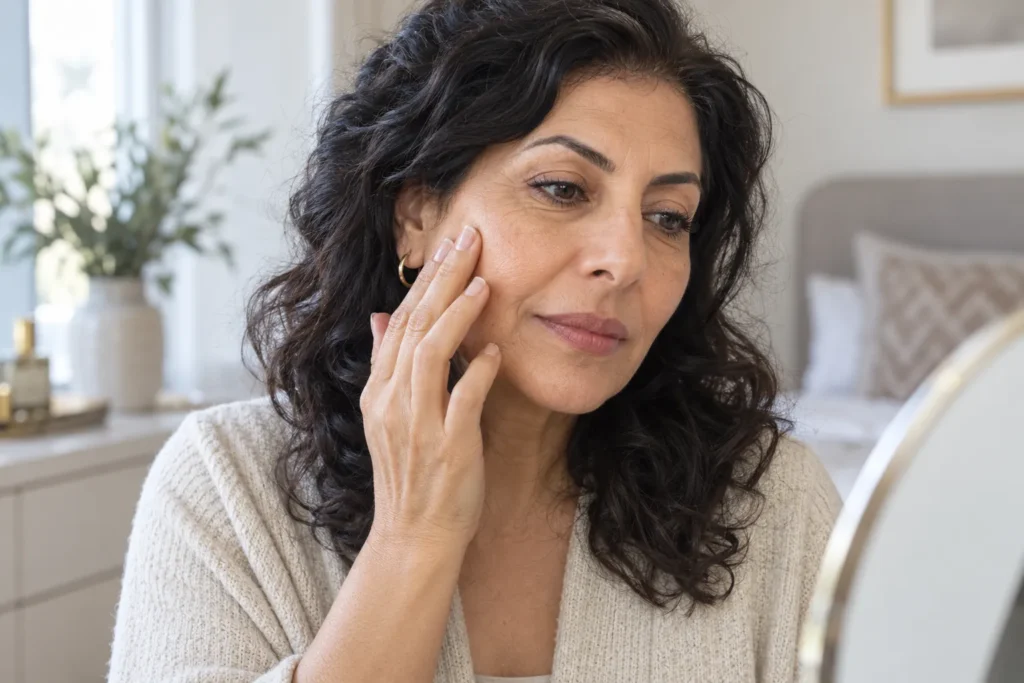
There is a particular kind of disappointment that can arrive after foundation goes on. The face looked rested in the mirror a few minutes earlier, yet colour seems to gather beside the eyes, settle around the mouth and draw attention to lines that did not feel so obvious. For someone who has worn makeup with confidence for years, the change can make an ordinary morning feel strangely personal. It may even create the fear that makeup now reveals more than it softens.
The foundation is not necessarily the problem, and the skin has not suddenly failed. Dehydration can change the way the outer surface reflects light, bends with expression and interacts with pigment. When that surface has less water, fine lines can look sharper and makeup can collect where the skin folds. The finish may therefore appear older, drier or heavier even when the same bottle and technique worked well before.
This is an encouraging connection to understand because surface hydration is something a thoughtful routine can support. Foundation cannot erase normal expression or structural wrinkles, but it can sit more gracefully when the skin feels supple and well conditioned. The aim is not to create an unnaturally smooth face. It is to give mature skin the comfort and flexibility that help makeup look like part of the face rather than a layer resting on top of it.
Why dehydration changes the appearance of fine lines
The outermost layers of the skin need water to remain flexible and comfortable. When water levels are lower, the surface can look less plump, feel tighter and develop a fine papery texture. Small creases then cast more visible shadows, especially under direct light or magnifying mirrors. Foundation adds colour to that surface, so it can increase the contrast between the higher and lower points.
This does not mean foundation creates wrinkles. It means pigment follows the texture already present and may collect where movement repeatedly folds the product. Smiling, speaking and blinking are enough to shift a rigid layer into fine lines over several hours. A more hydrated surface generally moves with greater flexibility, which gives makeup a better opportunity to remain even.
Dehydration can be temporary and influenced by weather, air conditioning, indoor heating, cleansing habits and the products used beneath makeup. A late night or disrupted routine may also leave the face looking flatter, even though appearance alone does not explain the cause. Mature skin can notice these changes more readily because it may retain moisture less efficiently and produce less natural oil than it once did. The visible difference can be significant without representing a sudden change in the underlying structure of the face.
Dry skin and dehydrated skin are not identical
Dryness usually describes a shortage of oil or lipids at the surface, while dehydration describes insufficient water in the outer layers. A person can have dry skin, dehydrated skin or both at the same time. Mature skin often experiences overlapping needs, which is why a quick splash of water or a very light gel may not provide lasting comfort. Water-binding support and emollient nourishment have different but complementary roles.
Dryness can create flakes and rough edges that foundation catches around. Dehydration can make the surface feel tight and make fine lines look more distinct, even when there is no obvious flaking. When both are present, makeup may cling in some places and crease in others. Treating the entire problem as a need for thicker foundation usually adds pigment without improving the surface beneath it.
It can help to observe how the skin behaves before makeup is applied. Tightness after cleansing, dullness in climate-controlled rooms and a sudden increase in fine surface lines can point towards a need for better hydration and barrier-conscious care. Persistent roughness and a lack of comfortable softness may also suggest the routine needs more nourishing support. These observations make product choices more purposeful than simply buying whatever promises a flawless finish.
Foundation depends on the surface beneath it
Foundation spreads as a thin film of pigment, oils, water and other cosmetic ingredients. On a comfortable, well moisturised surface, that film can distribute more evenly and reflect light with greater softness. On dehydrated skin, it may lose flexibility as the day continues and gather where the face moves. The result can make fine lines look deeper even though the makeup has only changed the contrast around them.
Coverage level also matters. A heavy layer places more pigment across every fold, while repeated blending can disturb dry cells and remove the skincare underneath. Adding another coat to a creased area often produces a thicker crease rather than a smoother finish. Beginning with a thin layer and building only where needed usually respects mature texture more effectively.
The relationship is explored more broadly in our guide to why dry skin can make makeup sit poorly on mature skin. The important idea is that makeup is not separate from skincare. It responds to cleansing, moisturising, product timing and the condition of the barrier. Better preparation can therefore improve the experience without demanding that the skin become perfectly smooth.
Light can make the difference look dramatic
Dehydrated skin often reflects light less evenly. A smooth, flexible surface creates softer transitions, while tiny dry ridges and lines create small highlights and shadows. Matte foundation can increase this effect because it reduces surface shine and may make texture more visible under strong light. What looks acceptable in a softly lit bedroom can seem very different beside a bright window.
Magnifying mirrors can intensify the concern further. They reveal details that other people do not see at normal conversational distance and can encourage more concealer, foundation and powder. Each extra layer may then make the texture more noticeable in ordinary light. Assessing the finish in natural light and at a realistic distance can prevent an anxious cycle of correction.
A luminous finish is not automatically the answer, because overly shiny products can also gather or move. The goal is balance rather than a particular trend. Skin that feels comfortable, foundation applied sparingly and selective powder can create a finish that reflects light without looking wet or heavy. The best result usually comes from several modest choices working together.
Cleansing can begin the problem before makeup
A harsh morning cleanse can remove more surface oil than the skin comfortably gives up. Hot water, strong foaming formulas and repeated rubbing may leave the face tight before any skincare is applied. Moisturiser then has to repair the feeling created only minutes earlier. Foundation placed over that stressed surface may appear dry long before lunchtime.
Many mature faces do not need an aggressive cleanse in the morning. A gentle cleanse or simple rinse may be enough, depending on the products used overnight and the individual routine. Patting rather than rubbing helps reduce friction, and warm rather than hot water is usually kinder to comfort. The objective is a clean surface that still feels like skin, not a surface stripped of every trace of softness.
Evening cleansing matters as well because makeup and sunscreen need to be removed without creating a cycle of stripping and rescue. Thorough removal can still be gentle when the product and technique are well chosen. If the face feels squeaky, tight or uncomfortable after every cleanse, the routine may be working against the next morning’s makeup. Preparation for tomorrow begins when today’s makeup comes off.
Hydration needs something to help it last
Humectants such as glycerin and hyaluronic acid help support water in the outer layers of the skin. That contribution can make the surface feel more supple and improve the appearance of dehydration lines. Humectant support works best as part of a complete formula rather than as an isolated promise. Mature skin often also benefits from emollient ingredients that soften roughness and help the surface feel less exposed.
Black Seed Oil and other emollient components can contribute nourishing softness, while allantoin and conditioning ingredients support a more comfortable feel. Antioxidant vitamins and a considered botanical blend can add broader cosmetic support within a multi-functional formulation. No single ingredient needs to carry the entire routine. The value comes from complementary roles brought together in a form that is practical to use consistently.
This is one reason the difference between a basic moisturiser and a broader formulation matters. Our article on a basic moisturiser compared with a multi-functional skin cream explains why mature skin may ask for hydration, nourishment and barrier support at the same time. A short-lived wet feeling is not the same as sustained comfort. Makeup tends to look better when the skincare beneath it addresses more than one surface need.
Reno Cream follows the Skin Trifecta Method
Reno Cream was designed for dry, mature and problem-looking skin that no longer feels satisfied by a simple layer of moisture. Its formulation brings humectant, emollient, conditioning and antioxidant functions together in one daily cream. Glycerin and hyaluronic acid support hydration, while Black Seed Oil helps nourish and soften the surface. MSM, allantoin, vitamin E, ascorbyl palmitate and selected botanical extracts contribute to the wider conditioning approach.
The philosophy is expressed through the Skin Trifecta Method: Repair, Nourish and Defend. Repair means supporting the barrier and reducing the avoidable habits that leave the skin feeling stripped. Nourish means providing hydration, emollience and conditioning in a considered formula. Defend means helping the skin face everyday environmental pressure with consistent care, appropriate sunscreen and fewer unnecessarily harsh choices.
For makeup wearers, this method is useful because foundation responds to all three needs. A stressed barrier can feel tight, an undernourished surface can look rough and an unprotected routine can lose comfort through the day. Reno Cream gives those overlapping needs a practical place in the morning routine. It does not ask makeup to repair the skin; it helps prepare the skin so makeup can remain a cosmetic choice.
Apply skincare in a calm sequence
More product is not always better immediately before foundation. A generous wet layer may cause slipping, pilling or separation when sunscreen and makeup follow too quickly. Apply a sensible amount of Reno Cream across the face, then give it time to settle while another part of the morning routine is completed. The skin should feel supple and comfortable rather than coated.
Pay particular attention to the cheeks, around the mouth and any area where fine lines become prominent after makeup. If one zone remains dry, a small targeted addition can be more useful than another full layer. Gentle pressing or smoothing is enough; vigorous massage is not necessary. The aim is even preparation without unnecessary friction.
Sunscreen should follow according to its directions and be allowed to form an even layer. Rushing foundation over moving skincare can create texture unrelated to dehydration itself. A few unhurried minutes between purposeful layers often improves the final result. Our detailed guide to preparing dry mature skin before makeup sets out that sequence step by step.
Choose foundation by behaviour rather than label
Words such as hydrating, radiant and age-defying can be helpful clues, but they do not ensure a particular result on every face. A formula may contain moisturising ingredients yet still dry down too firmly for one person’s expression lines. Another may feel creamy but move too much over rich skincare. Testing behaviour on the actual skin is more useful than relying only on the marketing category.
Consider how the foundation looks after several hours, not only when first applied. A flexible medium-coverage formula may remain more flattering than a full-coverage product that sets into a rigid film. Colour match also matters because a shade that is too light can make dryness look ashy, while one that is too dark can increase contrast in creases. The right foundation should cooperate with the skin rather than demand constant repair.
Seasonal changes may justify a different formula or a different amount. A foundation that performs well in humid weather may look drier in winter or in a heated office. The article on indoor heating, dry skin and more noticeable fine lines explains how low-humidity environments can change the surface through the day. Adapting to the environment is sensible skincare, not inconsistency.
Application technique can reduce creasing
Start with less foundation than habit may suggest. Place it where tone needs evening and blend outward, leaving naturally clear areas with a lighter layer. A damp sponge or gentle fingertips can press product into place without excessive dragging. Brushes can work beautifully too when they are used with light strokes rather than repeated buffing over dry areas.
Movement around the eyes and mouth deserves particular restraint. Thick concealer and foundation layers have more material available to gather in fine lines. Use small amounts, allow each layer to settle and add coverage only where the result genuinely improves. Flexible, thin layers usually move more naturally with expression.
If product settles into a line, press it outward with a clean fingertip or sponge before adding powder. This removes excess rather than locking it into place. Powder can then be applied sparingly where transfer or shine is a concern. Setting every part of a dehydrated face heavily can trade movement for a dry, emphasised texture.
Powder should have a specific job
Powder is useful for reducing unwanted shine, setting mobile products and improving wear in selected areas. It becomes less helpful when it is applied automatically across cheeks that are already dry. Fine particles can absorb surface oils and create a flatter finish, making dehydration lines appear more distinct. Using less often produces a fresher result than searching for a perfect powder.
Apply a small amount around the nose, forehead or other areas where makeup genuinely moves. Leave drier zones with their natural finish unless they need setting. A soft brush can distribute a sheer veil more evenly than a dense puff pressed repeatedly over texture. The goal is control without removing every sign of life from the skin.
Observe the finish in several kinds of light before adding more. Powder is easy to build and difficult to remove cleanly once foundation is underneath. Restraint also leaves room for the skin’s moisturised surface to remain visible. Mature makeup looks most convincing when it allows normal texture and expression to belong.
Midday creasing is information, not failure
A midday mirror can reveal where the routine needs adjustment. If foundation consistently settles around the mouth, there may be too much product there or not enough preparation underneath. If the entire face looks tight by afternoon, the morning cleanse, moisturiser, room environment or foundation finish may be contributing. Patterns are more useful than blaming age.
Press creased product outward rather than layering more foundation directly on top. A clean sponge or fingertip can restore flexibility without increasing thickness. If the surface feels dry, a compatible mist or very small amount of moisturising product may help, but it should be tested carefully so the layers do not separate. The most reliable midday strategy usually begins with better preparation the next morning.
Keep the routine steady long enough to understand it. Changing cleanser, cream, primer and foundation at the same time makes it difficult to identify what helped. One considered adjustment followed by observation produces clearer information. Mature skin deserves a routine built on attention rather than panic.
Confidence does not require a line-free face
Fine lines record expression, time and a life that has been lived. They do not make a face unsuitable for makeup, and they do not need to disappear before someone can feel polished. Dehydration may make them look sharper on a particular morning, but that surface change is not a verdict on beauty. It is a practical signal that the skin needs gentler and more complete support.
When the routine repairs unnecessary stress, nourishes with complementary ingredients and defends against everyday dryness, makeup has a more cooperative surface. The improvement may appear as softer texture, greater comfort and foundation that looks less heavy by afternoon. Those are meaningful cosmetic benefits because they return ease to a familiar ritual. The face remains expressive while the finish becomes more forgiving.
You can explore Reno Cream for dry, mature and problem-looking skin when a basic moisturiser no longer provides enough lasting comfort beneath makeup. Read the Skin Trifecta Method guide to Repair, Nourish and Defend for the wider routine philosophy. Foundation should help you enjoy getting ready, not make you afraid of every line. Supporting the skin beneath it is the kindest place to begin.