
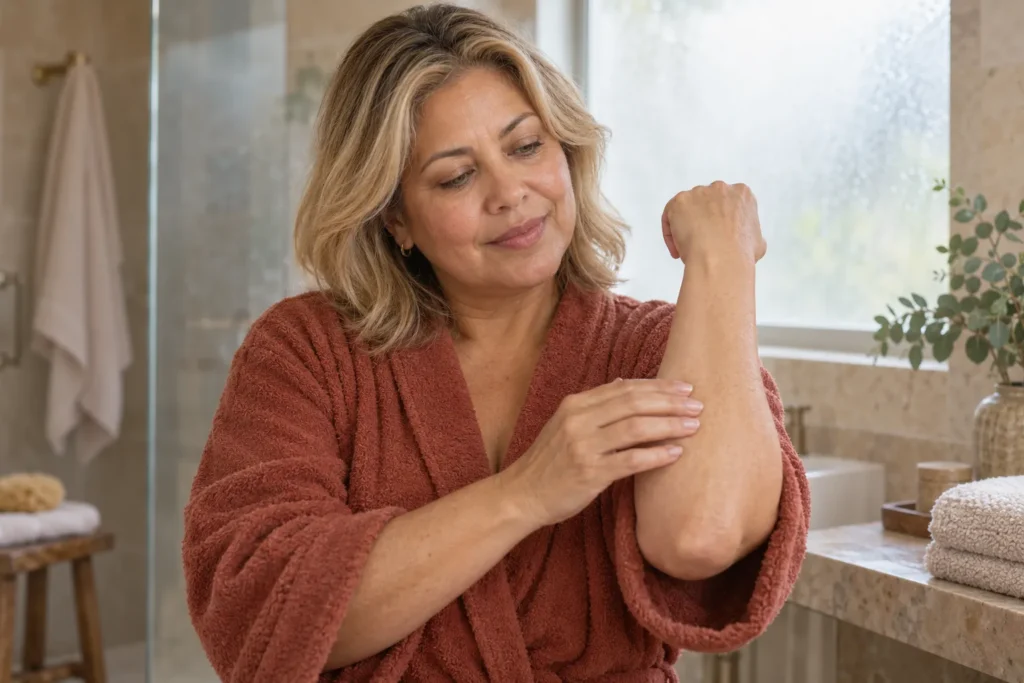
You notice a dark mark on your forearm and cannot remember hitting anything. A few days later, another bruise appears on the back of your hand after what seemed like the slightest bump against a cupboard or doorframe. For many people, this becomes increasingly familiar as they get older, particularly on the hands, forearms and lower legs.
It can be surprising because the knocks themselves may not seem any harder than they were twenty years ago. What has changed is the skin and the tissues beneath it. As the skin becomes thinner and some of its underlying support changes with age, small blood vessels can become more vulnerable to everyday knocks and pressure that may once have left little or no visible mark.
Easy bruising is therefore something many older adults notice. However, because bruising can also be influenced by medicines and medical conditions, it is important to understand what cosmetic skincare can realistically do and when unexplained bruising deserves professional attention.
Why Can Bruising Become More Common With Age?
A bruise develops when small blood vessels beneath the surface are damaged and a small amount of blood leaks into the surrounding tissue. The familiar purple, blue, brown, green or yellow colours appear as the body gradually clears that blood away. What looks dramatic on the surface may sometimes have been caused by a relatively minor bump.
As we get older, the skin generally becomes thinner and loses some of the cushioning and structural support that helped protect those small vessels earlier in life. Changes in collagen, elastin and the fatty tissue beneath the skin can all contribute. This means the distance between an everyday knock and the delicate blood vessels underneath may effectively become less forgiving.
That is why a bump you barely noticed can sometimes produce a bruise that seems completely out of proportion to what happened.
Why Are the Hands and Forearms Often Affected?
The backs of the hands and the forearms are common places to notice age-related bruising. These areas are regularly exposed to sunlight and everyday knocks, and there is relatively little padding protecting some parts of them. Years of accumulated sun exposure can also contribute to visible changes in the skin.
You may notice that the skin on your forearms looks thinner than it used to, particularly when you gently pinch or move it. Veins may appear more prominent and the surface can look slightly translucent or papery. When that thinner-looking skin is combined with reduced cushioning underneath, even minor contact with furniture, gardening equipment or household objects may leave a visible mark.
This does not necessarily mean the skin has suddenly become unhealthy. It may simply mean that the physical protection around those small blood vessels has changed.
Why Can Mature Skin Look Thin and Papery?
The thin, papery appearance that sometimes develops later in life is closely connected to many of the changes we discussed in Article 40. The skin gradually produces less of some of the structural components associated with firmness and elasticity, while natural oil production and moisture retention can also change. The result may be skin that looks thinner, drier and less resilient.
Dryness can make this appearance even more noticeable. When the surface is poorly hydrated, fine lines and crepey texture can become more obvious, making the skin look more fragile than when it is properly moisturised and conditioned. Improving hydration will not rebuild all the deeper structures that change with age, but it can make the surface look and feel considerably better.
This distinction is important because moisturising mature skin is worthwhile even when a moisturiser cannot prevent every bruise.
Years of Sun Exposure Can Matter
Many of the areas where older adults notice easy bruising are also areas that have received decades of sunlight. The forearms and backs of the hands are obvious examples. Even people who carefully protect their faces may have spent years driving, gardening, walking or working outdoors with their arms exposed.
Long-term ultraviolet exposure contributes to changes in collagen and other structures within the skin. Over many years, that can contribute to the thinner, more fragile-looking appearance commonly associated with heavily sun-exposed mature skin. This is one reason sun protection remains relevant later in life rather than becoming something we only need to think about when we are young.
We cannot undo decades of exposure with a moisturising cream, but we can make sensible decisions about protecting the skin we have now.
Dryness and Bruising Are Not the Same Thing
It is easy to see dry, thin-looking skin and bruising together and assume that dryness itself is causing the bruises. The relationship is more complicated than that. A moisturising cream can improve hydration, softness, comfort and the appearance of the surface, but it does not function like protective padding around the blood vessels underneath.
That means you should be cautious of skincare products claiming that a cosmetic cream can simply stop age-related bruising. The appearance and comfort of dry mature skin can certainly be improved, but preventing bruising may involve factors that exist below the level a cosmetic moisturiser can realistically address.
Good skincare still matters. We simply need to give it the right job.
Why Moisturising Fragile-Looking Mature Skin Still Makes Sense
If moisturiser cannot guarantee that you will stop bruising, you might reasonably ask why it matters. The answer is that mature skin often has several needs at the same time. The skin may bruise more easily while also becoming extremely dry, rough, flaky, crepey or uncomfortable.
Improving hydration and conditioning can help the surface feel softer and more supple. It may reduce the parched appearance that makes thin mature skin look even more fragile, while helping the skin feel more comfortable during everyday activities. That is a meaningful cosmetic benefit even though it is different from changing the underlying blood vessels.
The aim should therefore be to support the condition of the skin rather than promise something a moisturiser cannot deliver.
Be Gentle With Skin That Bruises Easily
When the skin has become thin and easily marked, aggressive body care makes very little sense. Rough exfoliating gloves, harsh scrubs and vigorous rubbing with towels may simply add unnecessary friction to an area that already needs gentler handling.
Try patting the skin dry rather than rubbing it forcefully after bathing. Use comfortably warm rather than extremely hot water and consider whether every area of the body really needs vigorous soaping during every shower. These small changes may sound ordinary, but mature skincare often improves when we stop repeatedly doing things that leave the skin feeling stripped.
Gentleness is not the same as doing nothing. It is simply choosing care that respects the condition of the skin.
Protect the Forearms From Everyday Knocks
Some of the most useful strategies for easy bruising have nothing to do with skincare products. If you garden regularly, work around tools or frequently bump your arms during household activities, lightweight long sleeves can provide a simple physical layer between the skin and the environment.
Look around your home as well. Sharp furniture edges, narrow walkways and frequently used cupboards may be responsible for more bruises than you realise. Because minor knocks are easily forgotten, it can genuinely feel as though bruises are appearing from nowhere.
Reducing unnecessary knocks may not sound glamorous, but sometimes the most practical solution is also the simplest.
Medicines Can Affect Bruising
Easy bruising is not always just an age-related change in the skin. Some medicines can make bruising more likely, including medicines that affect blood clotting or platelet function. Certain corticosteroid medicines can also contribute to thinning of the skin when used in particular ways or over extended periods.
This does not mean you should stop a prescribed medicine because you notice bruising. Doing that without medical advice can be dangerous. Instead, if bruising has increased since starting or changing a medicine, discuss it with your doctor or pharmacist.
The important point is that unexplained bruising should not automatically be treated as a skincare problem.
Repair: Treat Fragile-Looking Mature Skin More Gently
Within the Skin Trifecta Method™, the first step is Repair. In this context, Repair does not mean claiming that a cosmetic cream can rebuild damaged blood vessels or reverse every structural change associated with ageing. It means creating a skincare routine that stops unnecessarily working against already dry, fragile-looking mature skin.
That can include reducing harsh cleansing, excessive exfoliation, vigorous towel drying and very hot showers. It can also mean moisturising consistently rather than waiting until the surface becomes extremely dry and uncomfortable. These changes help create a more supportive environment for the skin you have now.
Repair begins by recognising that mature skin may need different treatment from the skin you had decades earlier.
Nourish: Support Dry, Thin-Looking Skin
The second part of the Skin Trifecta Method™ is Nourish. Thin-looking mature skin is often dry as well, which means hydration and conditioning deserve attention even when bruising itself has deeper causes.
Humectants can help support hydration in the outer layers of the skin, while oils and emollient ingredients can help improve softness and conditioning. When these functions are brought together in a well-considered moisturising formulation, the surface can feel more comfortable and look less parched.
This is where cosmetic skincare has a useful and realistic role. We are not pretending to turn 75-year-old skin into 25-year-old skin. We are helping mature skin look and feel better at the age it is now.
Why Reno Was Formulated This Way
This is also why Reno Cream was developed as more than a very lightweight moisturiser. Mature skin rarely presents with just one concern. Dryness may appear alongside roughness, crepey texture, tightness, dullness and the thinner-looking surface that becomes increasingly noticeable with age.
At the centre of the Reno Cream formulation are black seed oil, MSM and allantoin, alongside glycerin and hyaluronic acid as part of the hydration system. Vitamin ingredients and a selected botanical blend provide additional components within the wider formula. Rather than expecting one fashionable ingredient to solve every mature-skin concern, different ingredients were selected to perform complementary cosmetic roles.
Our formulation philosophy is straightforward: start with what the skin needs, then choose ingredients that can perform different jobs within the same system.
You can learn more about Reno Cream Skin Repair Cream here.
Why Hydration Is Especially Important for Papery-Looking Skin
When thin mature skin becomes very dry, the surface can appear even more crepey and papery. Fine lines become more visible and the skin can lose some of the smooth, conditioned appearance that better hydration provides. This can make the arms and hands look more fragile even when nothing significant has changed underneath.
Ingredients such as glycerin and hyaluronic acid are included in moisturising formulations because they can support hydration in the outer layers of the skin. Oils and other conditioning ingredients perform different functions, helping the surface feel softer and less dry.
Hydration cannot replace lost structural tissue underneath the skin, but it can improve the condition of the surface considerably. That is a realistic and worthwhile objective.
Defend: Protect the Skin You Have Now
The third part of the Skin Trifecta Method™ is Defend. For mature skin that bruises easily, Defend involves thinking beyond the jar of cream and looking at the environment around you.
Protect the arms from unnecessary knocks when practical. Continue appropriate sun protection, particularly on the hands and forearms that may already have accumulated decades of exposure. Keep the skin moisturised and adjust your routine during cold weather, low humidity or other conditions that leave it particularly dry.
Defend is not about creating an invisible shield that makes the skin impossible to bruise. It is about reducing avoidable stress while supporting the comfort and condition of mature skin.
What About Bruise Creams?
There are many creams and gels marketed specifically for bruising, often containing botanical extracts or other ingredients. Some people enjoy using them, but it is worth keeping expectations realistic and distinguishing between improving the appearance or comfort of the surface and changing the biological processes responsible for bruising.
A bruise will normally change colour as the body gradually breaks down and clears the leaked blood. No cosmetic moisturiser should be presented as a guaranteed way of making that process disappear overnight.
If bruising is frequent, severe or unexplained, finding out why it is happening is more important than repeatedly covering it with another cosmetic product.
When Should Easy Bruising Be Checked?
Occasional bruising after minor bumps becomes more common for many people as they get older, but there are situations where medical advice is sensible. Bruises that appear frequently without any remembered injury, suddenly become much more common, are unusually large, occur alongside unusual bleeding or develop after starting a new medicine deserve attention.
You should also seek professional advice if you are simply concerned about a change in your bruising pattern. A doctor can consider medicines, medical history and other factors that a skincare article cannot evaluate.
This is particularly important because the visible bruise is only the end result. The reason it appeared may have little to do with skincare.
A Simple Routine for Thin, Dry and Easily Marked Mature Skin
Keep the routine uncomplicated. Cleanse gently, avoid excessively hot water and do not scrub the arms simply because the surface looks dry or flaky. After bathing, gently pat the skin and apply a moisturising cream while the surface is still slightly damp.
During the day, protect exposed areas from excessive sunlight and consider lightweight clothing when doing activities where the arms are likely to be bumped or scraped. Continue moisturising consistently rather than only applying cream after the skin has become extremely dry.
Most importantly, watch for changes. If bruising suddenly becomes much more frequent or appears without an obvious explanation, treat that as a health question rather than simply buying a stronger moisturiser.
Mature Skin Needs Respect, Not Fear
Seeing bruises appear more easily can make the skin feel fragile in a way you may never have thought about when you were younger. But ageing skin does not need to be treated as though it is failing. It simply has different characteristics and, in many cases, requires a different approach to everyday care.
The practical response is not to promise that skincare can stop every bruise. It is to treat the skin gently, support hydration and conditioning, protect it from unnecessary knocks and sun exposure, and recognise when bruising deserves medical assessment.
That fits naturally within the Skin Trifecta Method™. Repair by reducing habits that repeatedly stress the skin. Nourish dry mature skin with thoughtful hydration and conditioning. Defend by protecting the skin from avoidable environmental and physical stress.
The skin may be thinner than it once was, but good mature skincare is not about pretending ageing has not happened. It is about understanding what has changed and caring for the skin accordingly.
For a deeper explanation of the Reno approach, read The Skin Trifecta Method™: Repair, Nourish & Defend for Adult and Mature Skin.