
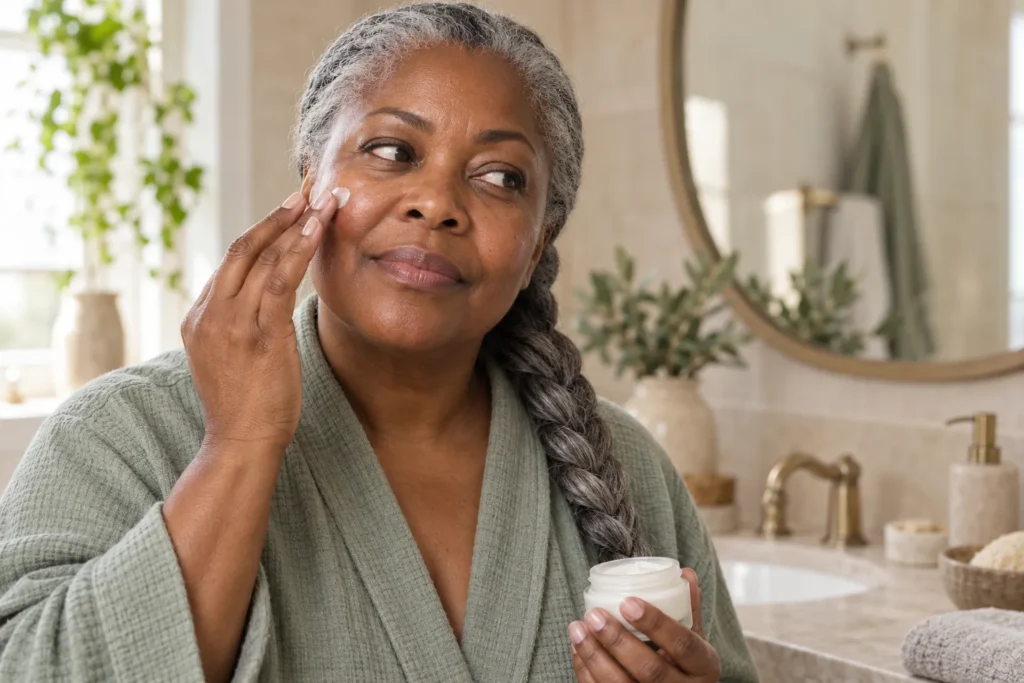
You apply moisturiser expecting your skin to feel softer and more comfortable, but instead you get an unexpected sting. Sometimes it lasts only a few seconds, while other times there is a persistent burning, prickling or uncomfortable sensation. This can be particularly confusing when the moisturiser is one you have used before without any problem. If this has started happening as your skin has become drier, more sensitive or more mature, it may be worth paying attention to what your skin is telling you.
Stinging does not automatically mean that you are allergic to your moisturiser, and it does not necessarily mean that the product is too strong. There are several possible explanations, ranging from temporary dryness and over exfoliation to irritation from a particular ingredient. Sometimes the problem has less to do with the moisturiser itself and more to do with the condition of your skin when you apply it. Understanding that difference can help you make better decisions about what to use next.
Why Can Moisturiser Suddenly Start Stinging?
Healthy looking skin has an outer protective layer that helps keep water in and limits the penetration of substances from the outside environment. When this protective function becomes stressed or compromised, products that once felt perfectly comfortable can suddenly feel very different. Even ingredients that are normally considered gentle may produce a noticeable sensation on very dry, irritated or over treated skin. This can make it seem as though your moisturiser has suddenly changed when your skin may actually be the thing that has changed.
This is one reason people sometimes say, “I’ve used this cream for years, so why is it suddenly stinging?” The formulation may not have changed at all, but your skin may have. Age, weather, cleansing habits, exfoliation, active skincare products and hormonal changes can all influence how comfortable your skin feels. Rather than immediately adding another product, it can be useful to consider what has changed in your routine or your skin.
1. Your Skin May Be Extremely Dry
Very dry skin is not simply skin that needs to look more moisturised. When the outer layers become depleted of water and natural lipids, the surface can become rougher, tighter and more vulnerable to irritation. Tiny cracks may develop that are difficult to see but can make products feel uncomfortable when applied. This is one reason severe dryness can sometimes make even an ordinary moisturiser sting.
This can be particularly noticeable after showering or washing your face. Hot water, harsh cleansers and repeated washing can remove some of the oils that help keep the skin comfortable. Applying moisturiser afterwards may then produce a temporary sting. The solution is not necessarily to stop moisturising, but to look at the entire routine that surrounds it.
2. Your Skin Barrier May Be Stressed
The phrase skin barrier is used frequently in skincare, but it describes something very practical. The outermost layer of your skin helps reduce excessive water loss while providing protection from the environment. When that layer is functioning well, skin generally feels more comfortable and resilient. When it becomes stressed, the difference can sometimes be surprisingly noticeable.
You may notice tightness, dryness, flaking, roughness or increased sensitivity to products. A moisturiser that previously felt soothing may suddenly produce tingling or stinging. If several normally comfortable products begin causing the same reaction at approximately the same time, your overall skin condition deserves consideration rather than blaming one individual moisturiser. You can learn more in our guide to how to repair a damaged skin barrier.
3. You May Be Exfoliating Too Much
Exfoliation can make skin feel smoother, but more is not necessarily better. Acids, scrubs, exfoliating toners, retinoids and other active products can become problematic when several are combined or used too frequently. The result can be skin that feels unusually tight, shiny, tender or sensitive. This can happen gradually, so you may not immediately connect the discomfort with your exfoliation routine.
One clue is when products that normally do not sting suddenly begin to do so. People sometimes respond by exfoliating even more because the skin feels rough or flaky, unintentionally making the situation worse. Temporarily simplifying the routine and allowing the skin to settle can be more useful than continually adding stronger products. Your skin does not need to feel uncomfortable for your skincare routine to be effective.
4. Your Cleanser Could Be Part of the Problem
It is easy to blame the moisturiser because that is the product you are applying when the sting occurs. But the process may have started several minutes earlier when you cleansed your skin. Strong cleansing products can leave already dry skin feeling stripped and tight. The moisturiser may simply be the first product that makes you notice how uncomfortable your skin has become.
If your face feels uncomfortable immediately after washing, before moisturiser has even been applied, that is useful information. Mature and dry skin often benefits from gentle cleansing rather than repeatedly trying to achieve a squeaky clean feeling. Skin does not need to feel stripped in order to be clean. A gentler cleansing routine may help your skin feel considerably more comfortable.
5. Hot Water Can Make Dry Skin Feel Worse
A long hot shower can feel wonderful, especially during an Australian winter, but your skin may have a different opinion. Very hot water can contribute to dryness by removing surface oils and increasing water loss from the skin. The effect may be particularly noticeable on already dry or mature skin. Your face, neck, hands and lower legs may be among the first areas where you notice the difference.
You might step out of the shower with skin that feels tight and then notice your moisturiser stinging when you apply it. In that situation, the moisturiser may simply be the first product touching skin that has already become uncomfortable. Using warm rather than very hot water and keeping showers reasonably short can make a meaningful difference. Applying moisturiser while the skin is still slightly damp can also help support hydration.
6. An Ingredient May Not Agree With Your Skin
Not every ingredient suits every person. Fragrances, essential oils, preservatives, exfoliating acids and various active ingredients can sometimes cause irritation or sensitivity. Even ingredients that work beautifully for thousands of people may not be appropriate for everyone. Individual tolerance matters, particularly when the skin is already dry or sensitive.
This is why natural does not automatically mean non irritating, just as synthetic does not automatically mean harsh. Your individual response matters more than the marketing category an ingredient belongs to. If one particular product repeatedly causes significant discomfort while others do not, stop using it. If the reaction persists or becomes more severe, consider seeking professional advice.
7. Your Skincare Products May Be Fighting Each Other
Modern skincare routines can become surprisingly complicated. A cleanser may be followed by an acid toner, vitamin C serum, retinoid, another serum and finally moisturiser. Each product might be reasonable on its own, but together they can create more stimulation than the skin comfortably tolerates. The problem can become even more noticeable if you introduce several new products at approximately the same time.
When stinging begins, adding yet another repair product is not always the best first step. Sometimes the most useful intervention is subtraction. Simplifying your routine for a period can make it easier to identify what your skin actually tolerates. Once the skin feels comfortable again, products can be reintroduced gradually if they are still needed.
8. Weather and Your Environment Can Change Your Skin
Skin does not behave exactly the same way throughout the year. Cold weather, wind, indoor heating and low humidity can increase dryness, while air conditioning can also leave some people feeling drier. Someone who has no problems with a lightweight moisturiser in summer may find that it no longer provides enough comfort during winter. Your environment therefore deserves a place in the conversation when your skin suddenly changes.
Environmental exposure can change how a familiar skincare product feels. This is particularly relevant for mature skin, where natural oil production and water retention may already be reduced. Adjusting the richness and simplicity of your routine as conditions change can be more useful than expecting one routine to work identically throughout the year. Skincare sometimes needs to change with the season just as clothing does.
9. Mature Skin Can Become Less Tolerant of an Overcomplicated Routine
Skin changes gradually as we age. It commonly becomes drier, thinner and less oily, which can make aggressive routines increasingly uncomfortable. A routine you enjoyed in your thirties may therefore feel very different in your fifties, sixties or seventies. That does not mean there is something wrong with your skin.
Mature skin can still benefit from well chosen skincare ingredients. It simply means that hydration, moisturisation, gentleness and protection deserve greater attention. Our article Skin After 60: Why Moisturiser Alone May No Longer Feel Like Enough explores this change in greater detail. The goal is to work with changing skin rather than continually asking it to tolerate more.
10. Menopause Can Change How Your Skin Feels
Many women notice changes in their skin during perimenopause, menopause and the years that follow. Skin may become noticeably drier and sometimes feel more sensitive than it did previously. Products that were once adequate may no longer provide the same feeling of comfort. These changes can sometimes seem to arrive surprisingly quickly.
That can make a sudden change in product tolerance seem mysterious when it is actually occurring alongside broader changes in the skin. The answer is not necessarily a dramatically more complicated routine. For many people, this is precisely the stage when a thoughtful, gentle and consistent approach becomes more important. Moisturising, conditioning and protecting the skin can become increasingly valuable parts of everyday care.
Does Stinging Mean the Moisturiser Is Working?
No. The idea that skincare has to sting, burn or tingle to prove that it is working is a poor rule to follow. Some ingredients naturally produce mild sensations in some people, but discomfort should not be used as a measure of effectiveness. A product does not become more effective simply because you can feel it.
If a product causes persistent burning, significant redness, swelling, blistering or worsening irritation, wash it off and discontinue use. Severe reactions or symptoms that do not settle should be assessed by a healthcare professional. Skincare should ultimately make your routine more comfortable. You should not have to tolerate persistent discomfort simply because a product promises impressive results.
What Should You Do When Your Moisturiser Starts Stinging?
Start by looking at the whole routine rather than immediately buying another cream. Consider whether you have recently introduced an exfoliant, retinoid, serum, cleanser or other active product. Think about whether you have been washing more frequently, taking hotter showers or experiencing unusually cold, windy or dry weather. Small changes can sometimes explain why familiar skincare suddenly feels different.
For a short period, reducing unnecessary products may help you identify the source of the problem. Use a gentle cleanser if cleansing is necessary, avoid aggressive exfoliation and concentrate on moisturising and protecting the skin. Once your skin feels comfortable again, additional products can be reintroduced gradually if you want them. This also makes it easier to identify which product may be causing trouble.
Why Moisturising Alone May Not Tell the Whole Story
When skin repeatedly feels dry and uncomfortable, it is tempting to think exclusively in terms of adding more moisture. Hydration is extremely important, but mature skincare can involve several overlapping needs. The skin may need help maintaining moisture, greater conditioning and a routine that minimises unnecessary stress. That is very different from simply applying more and more moisturiser throughout the day.
This thinking is central to the Skin Trifecta Method™: Repair, Nourish and Defend. Rather than viewing every concern as a separate problem requiring another bottle, the method asks what the skin itself needs. It provides a simple framework for thinking about dry, mature and stressed looking skin without turning skincare into an unnecessarily complicated ritual. The objective is to support several related cosmetic needs within one coherent approach.
You can explore the philosophy in our free guide, The Skin Trifecta Method™: Repair, Nourish & Defend for Adult and Mature Skin.
Repair: Reduce Unnecessary Stress
Repair begins with recognising what may be making the skin feel uncomfortable. That could mean reducing over exfoliation, changing a harsh cleanser, avoiding very hot water or temporarily simplifying an overloaded skincare routine. Sometimes what skin needs most is not another active ingredient but fewer sources of irritation. Giving the skin a simpler environment can be surprisingly useful.
Within the Skin Trifecta philosophy, Repair describes creating a more supportive skincare environment for stressed looking skin. It is about treating the skin more gently and supporting its normal protective role. Reno Cream is a cosmetic skincare product and is not intended to diagnose or treat a medical skin condition. Persistent or unexplained symptoms should be discussed with an appropriate healthcare professional.
Nourish: Give Dry Skin More Than a Fleeting Splash of Moisture
Nourishment is about helping dry skin feel softer, smoother and more comfortable. Humectants can help attract and retain water, while emollient and conditioning ingredients can improve the way dry skin feels and looks. A thoughtfully formulated moisturising cream can bring several of these functions together. This is especially useful when dryness is only one part of what your skin is experiencing.
This becomes particularly relevant when mature skin seems to absorb a lightweight lotion and feel dry again shortly afterwards. The goal is not simply to make the skin temporarily wet or slippery. It is to provide sustained cosmetic support that helps dry skin feel properly cared for. This broader view of nourishment is an important part of the Skin Trifecta philosophy.
Defend: Protect the Improvements You Are Trying to Make
Good skincare is not only about what you put on your skin. Protecting it from excessive sun exposure, harsh weather and unnecessarily aggressive routines is equally important. Daily sun protection is particularly important because accumulated ultraviolet exposure contributes substantially to visible skin aging. Protecting mature skin therefore deserves to be considered alongside moisturising it.
Defend also means avoiding the cycle of constantly stressing the skin and then trying to compensate with more products. A consistent routine can often achieve more than repeatedly chasing the latest active ingredient. Mature skin usually benefits from patience and regular care. The aim is to preserve comfort and support the appearance of the skin over time.
Why Reno Cream Was Formulated This Way
This broader view of skin needs influenced the philosophy behind Reno Cream. We did not want to create another product whose only story was that it moisturises. The formulation was approached from the perspective that dry and mature looking skin can have several cosmetic needs occurring at the same time. Dryness, roughness, reduced suppleness and a stressed looking surface can often appear together rather than separately.
That is why Reno Cream brings together complementary ingredient types rather than relying on a single fashionable hero ingredient. Its formulation includes ingredients selected to contribute different moisturising, conditioning and skin supporting roles within the overall cream. The objective is not to overwhelm the skin with actives. It is to provide a practical multifunctional approach to everyday care.
The Ingredient Philosophy Behind Reno Cream
Within Reno Cream, ingredients such as glycerin and hyaluronic acid contribute to the hydration side of the formulation, while emollient components help condition and soften dry feeling skin. Black seed oil, MSM and allantoin form part of the broader formulation philosophy, alongside vitamin E, a vitamin C derivative and selected botanical extracts. Each ingredient has a reason for being there rather than simply appearing on the label because it is currently fashionable. The finished formulation matters more than any one ingredient considered in isolation.
The important concept is ingredient synergy. Different ingredients have different jobs, and the value of a finished cosmetic depends on how those ingredients work together within the complete formulation. This is why we prefer to talk about what the formula was designed to accomplish cosmetically rather than presenting one ingredient as a miracle solution. It also reflects the wider Repair, Nourish and Defend philosophy behind Reno Cream.
But Should Reno Cream Sting?
A cosmetic cream intended for regular use should not be expected to cause significant burning or persistent discomfort. Individual skin responses vary, however, and even a carefully formulated product cannot be guaranteed to suit every person. If Reno Cream, or any skincare product, causes persistent stinging, redness or irritation, discontinue use. What feels comfortable for one person may not necessarily feel comfortable for another.
This is especially important if your skin is already visibly inflamed, broken or experiencing an unexplained reaction. A cosmetic moisturiser should not be used as a substitute for diagnosing or treating a medical skin condition. Persistent or severe symptoms deserve professional assessment. Knowing when not to keep experimenting with skincare is an important part of caring for your skin.
What If Everything You Put on Your Face Suddenly Burns?
If almost every product suddenly stings, that is more significant than one particular moisturiser causing a problem. Your skin may be extremely dry or irritated, or there may be another underlying reason for the increased sensitivity. Continuing to experiment with multiple new products can make it harder to determine what is happening. This is a situation where simplicity becomes particularly important.
Strip the routine back and avoid products that clearly worsen the discomfort. If the problem persists, becomes severe or is accompanied by swelling, blistering, a significant rash or other concerning symptoms, seek medical advice. There are times when the smartest skincare decision is recognising that the problem has moved beyond skincare. A healthcare professional can help determine whether something else is contributing to the reaction.
A Simpler Way to Listen to Your Skin
Stinging is information. It does not automatically tell you exactly what is wrong, but it does tell you that something deserves attention. Instead of assuming that stronger sensations mean better results, consider dryness, your cleanser, exfoliation, environmental exposure, active ingredients and changes associated with aging. Your skin may simply be asking for a gentler approach.
For mature skin in particular, simplicity can be surprisingly powerful. Cleanse gently, moisturise thoughtfully, protect against the sun and avoid continually pushing the skin harder than necessary. Then use the Repair, Nourish and Defend framework to think about the skin as a whole rather than treating every visible concern as an isolated problem. Your moisturiser should ultimately help your skin feel more comfortable, not teach you to tolerate discomfort in the name of skincare.