
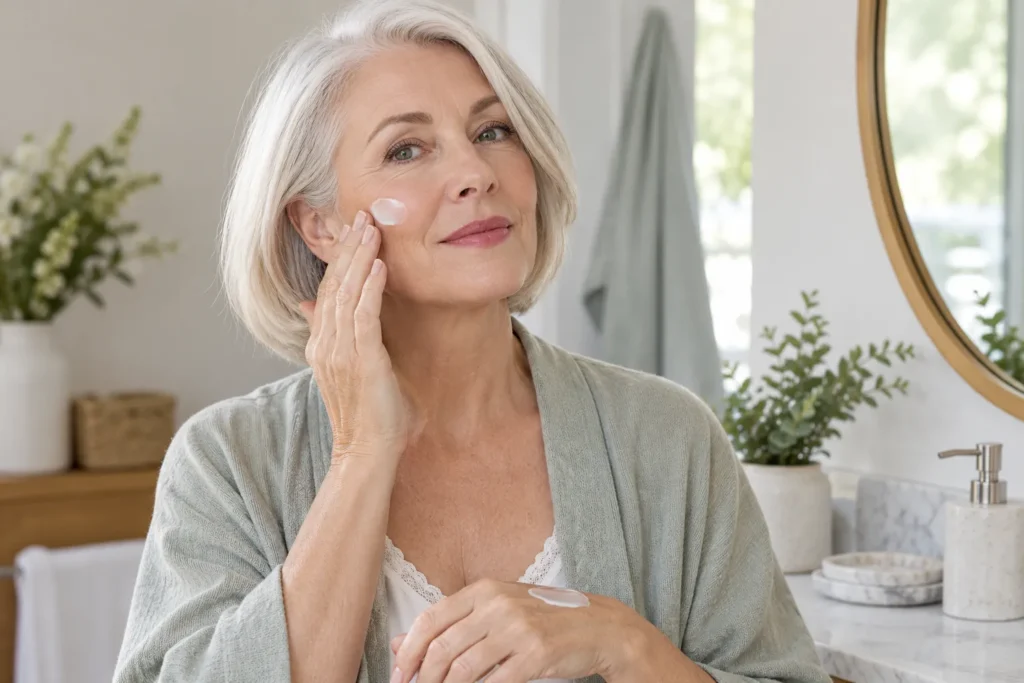
You smooth on moisturiser, turn to put the lid back, and the product seems to have vanished. For a moment the skin feels comfortable, but before long your cheeks, hands or legs feel as though they could take another layer. It can be strangely discouraging, especially when you are applying cream faithfully and still wondering whether the skin is absorbing too much, whether the moisturiser is too weak, or whether you are doing something wrong. That small daily frustration can make the bathroom mirror feel like a place of judgement rather than care.
When moisturiser sinks in quickly, the experience is real, but the explanation is rarely as simple as the skin “drinking” everything because it is thirsty. The product may spread into the outermost layers, water may begin to evaporate, and a lightweight formula may leave very little protective feel behind. Dry, mature or stressed-looking skin can make that disappearance seem even faster. Understanding what is happening lets you adjust the routine without blaming yourself or chasing ever more dramatic claims.
What does “sinking in” actually mean?
A moisturiser is designed to sit within and across the outer surface of the skin, where it can provide water-binding, softening and protective effects. Some components distribute into the upper layers while others leave a fine film that reduces roughness and improves comfort. The balance between those effects determines whether a product feels light, rich, silky, waxy or barely there. Fast absorption is therefore partly a sensory property of the formula, not a direct measurement of how dry the skin is.
Water-rich lotions often feel refreshing and disappear quickly because they are designed for easy spread and a light finish. That can be ideal in humid weather or for skin that does not need much emollience. It may feel insufficient, however, when mature skin is dry, the barrier is under strain or the environment is drawing moisture away. A cream with more substantial emollients can leave longer-lasting softness without needing to feel greasy.
The application area also changes the experience. A small amount spread over both legs will disappear faster than the same amount used on the hands because the product is being stretched across much more skin. Warm skin after a shower can make a cream spread readily, while very dry, rough skin may create more drag and use up the same amount over a smaller area. Before deciding that a moisturiser is failing, it helps to look at formula, quantity, timing and the condition of the skin together.
Reason one: the skin may need more than a lightweight lotion
Skin becomes dry when it lacks enough water, surface lipids or both to maintain a comfortable outer barrier. As the skin matures, changes in oil production, cell turnover and structure can make dryness, roughness and tightness more noticeable. A lotion that felt perfect years ago may now provide only brief relief because it does not leave enough emollient support behind. The product has not necessarily changed, but the needs of the skin may have.
This is where texture and formulation matter. A light lotion can add moisture, yet the skin may still benefit from richer emollients that soften rough areas and help create a more comfortable surface. Our guide to the difference between cream and lotion for mature skin explains why two products that both call themselves moisturisers can feel very different. Choosing a richer cream is not about using the heaviest possible product; it is about matching the finish to the skin in front of you.
Notice what happens one or two hours after application rather than judging only the first minute. If the skin remains soft, flexible and comfortable, fast absorption may simply be part of the elegant feel of the formula. If tightness, flaking or roughness returns quickly, the routine may need more product, a richer formula or better application timing. Comfort over time is a more meaningful guide than the speed at which visible cream disappears.
Reason two: you may not be applying enough
Many people use a very small amount of moisturiser because they dislike residue, want the jar to last or have learned that a pea-sized amount should cover everything. That advice does not translate neatly to the body, where the surface area is much larger. If a thin smear must travel from ankle to thigh, it cannot leave an even layer across every dry patch. The product may seem to sink in instantly when it has simply been spread too far.
Use enough cream for your hands to glide without tugging, then add a little more to areas that still feel rough. Work in sections so you can judge coverage: one lower leg, one forearm, one hand or one side of the face at a time. This is more reliable than placing one small amount in your palm and hoping it reaches everywhere. The correct amount is the amount that gives even comfort without leaving more residue than you enjoy.
Reapplication can also be entirely reasonable. Hands are washed repeatedly, elbows meet desks, and exposed arms encounter air, clothing and weather all day. A morning application cannot always be expected to survive every one of those events. Reapplying after washing or when the skin begins to feel tight is maintenance, not evidence that you have failed.
Reason three: the timing may be working against you
Waiting until the skin is fully dry and uncomfortable can make moisturiser harder to spread and may require more product. After bathing, gently pat away excess water and apply your cream while the skin remains slightly damp. This helps the formula spread and captures some of that surface water within the moisturising layer. The difference is often felt not as dramatic slipperiness, but as steadier comfort afterwards.
Very hot water can undermine that advantage by removing more surface lipids and leaving the skin tight. Long showers, frequent baths and harsh cleansers can all increase the sense that moisturiser disappears without doing enough. Use warm water, keep cleansing focused and avoid scrubbing mature skin merely because it looks flaky. A moisturiser performs best when the rest of the routine is not continually stripping away what the cream is trying to support.
Think about what happens immediately after application as well. Dressing at once in rough, absorbent fabric can remove some product from the skin, while washing the hands five minutes later obviously shortens its time on the surface. Give the cream a brief moment to settle when practical. Small changes in sequence can make a familiar product feel much more useful.
Reason four: the environment is taking moisture away
Cold wind, low humidity, indoor heating and constant air conditioning can make water leave the skin surface more readily. In those conditions, a light formula may feel adequate at home but insufficient at work or outdoors. The moisturiser has not stopped functioning; the environment has raised the demand placed on it. A richer morning layer or a targeted midday reapplication can help restore comfort.
Seasonal changes are one reason the same product can seem to behave differently from month to month. During warmer, more humid weather, the skin may prefer a smaller amount, while winter can call for greater coverage and more frequent use. Travel creates similar shifts, especially when moving between climates or spending hours in an aircraft cabin. A flexible routine keeps the core product stable while adjusting quantity and frequency.
Physical protection belongs in the solution too. Gloves, soft sleeves, shade and sensible sun protection can reduce exposure that makes the skin feel dry or stressed. This is part of Defend in the Skin Trifecta Method™, and it prevents moisturiser from carrying the entire burden alone. Good skincare includes the environment around the skin, not only the ingredients applied to it.
Reason five: the moisture barrier may be under strain
The outer skin barrier helps keep useful water in and irritants out. When it is stressed by over-cleansing, repeated friction, strong exfoliation, weather or an overcrowded routine, the skin may feel tight, rough or more reactive. Moisturiser can bring relief, but that relief may not last if the stressful habits continue. Supporting the barrier therefore involves both adding helpful care and removing avoidable pressure.
If you have recently introduced several active products, more is not always better. Acids, retinoid products, scrubs and fragranced formulas can each be useful in the right context, yet layering too many at once may leave the skin feeling unsettled. Return to gentle cleansing, moisturising and daytime protection, then reintroduce extras thoughtfully. The aim is not to make the skin tolerate the busiest possible routine.
This is also why a fast-disappearing moisturiser should not automatically trigger another exfoliation session. Flakiness is not always a layer that needs to be removed; it may be a sign that the outer skin needs gentleness and conditioning. Our article on why simplifying skincare can help stressed skin offers a practical way to reset the rhythm. A quieter routine often makes it easier to see whether the moisturiser itself is suitable.
Dry skin and dehydrated skin are related, but not identical
Dry skin is generally associated with insufficient oils or lipids, while dehydrated skin describes a lack of water in the outer layers. The two can overlap, especially when mature skin is exposed to dry air, hot water or frequent cleansing. Both may create tightness, dullness and more visible fine lines, but they do not always need exactly the same balance of support. That is why a formula containing only a water-binding ingredient may still feel incomplete on very dry skin.
Humectants attract water, emollients soften and smooth, and more protective components help slow moisture loss from the surface. A balanced cream brings those roles together rather than treating them as competing trends. If you want to explore the distinction more closely, read our guide to dry skin and dehydrated skin. Understanding the difference can help you stop judging a product by one ingredient or one moment of application.
It is also possible for the skin to feel dry even when you moisturise every day. Daily use matters, but cleanser choice, shower temperature, amount, formula and reapplication all influence the result. Our article Why Is My Skin So Dry Even Though I Moisturise Every Day? brings those pieces together in more detail. The central lesson is reassuring: persistent dryness does not automatically mean your effort has been pointless.
Look for a formula that does several jobs well
Moisturising is not one single action. The skin may need water-binding support, emollience that softens rough texture, conditioning ingredients that improve feel, and a comfortable surface layer that helps the benefits last. A product built around only one fashionable ingredient can miss that wider picture. For mature and problem-looking skin, a multi-functional formulation is often the more thoughtful choice.
Reno Cream was created around that principle. Glycerin and hyaluronic acid help attract and hold water at the skin surface, while oils and emollients help soften dry, rough areas and improve suppleness. Black seed oil, vitamin E, MSM and allantoin contribute to a broader conditioning approach, supported by a vitamin C derivative and selected botanicals. No single ingredient is asked to perform every task; the strength lies in how the formula works together.
The cream has enough substance to feel supportive without making heaviness the goal. It can be used on the face or body where the skin feels dry, rough, mature or stressed-looking, allowing one dependable product to anchor a simpler routine. Apply it to slightly damp skin, use a sufficient amount and return to high-demand areas such as the hands, shins, elbows or feet when needed. This is practical, confident skincare rather than a promise of instant transformation.
Use the Skin Trifecta Method™ to improve the whole routine
Repair begins by supporting the outer barrier and reducing the habits that repeatedly leave the skin tight. Choose gentler cleansing, moderate water temperature and give stressed areas a break from aggressive exfoliation. Moisturiser then becomes part of a supportive environment instead of a short-lived rescue after every shower. Over time, that consistency can improve the look and feel of dryness.
Nourish means supplying a balanced blend of humectants, emollients and conditioning ingredients. It also means using enough product and applying it often enough for the actual area being treated. A formula can be beautifully designed and still feel inadequate if a tiny amount is stretched over the whole body. Generous does not have to mean greasy; it means complete, even coverage.
Defend recognises that the skin meets the world after the jar is closed. Sunlight, wind, cleaning products, friction and repeated washing can all influence comfort, so clothing, gloves, shade and sunscreen matter. The complete Skin Trifecta Method™ guide shows how Repair, Nourish and Defend belong together. When all three are present, moisturiser no longer has to solve every problem in isolation.
A better way to apply moisturiser
Begin with clean skin that is slightly damp rather than dripping wet. Place the cream in several small points across the area, then smooth them together with gentle strokes until coverage feels even. This prevents one section from receiving nearly all the product while another gets the faint remainder. Avoid vigorous rubbing, especially where mature skin looks fragile or feels sensitive.
On the face, use comfortable outward strokes and extend the routine to the neck if the formula suits that area. On the body, work from the lower legs upward, then cover the arms, hands, torso and feet in sections. Give extra product to joints and rough zones rather than using the same amount everywhere by habit. Let the skin’s feel guide you within a consistent routine.
If the first layer settles and a particular area still feels tight, a second thin layer can be more comfortable than one very heavy application. This targeted approach is especially useful on the hands after washing, the shins in winter and the feet before bed. Keep the cream visible and accessible so reapplication becomes normal rather than exceptional. Convenience is an underrated part of good skincare.
How to tell whether the routine is working
Do not use immediate absorption as the only scorecard. Pay attention to whether the skin feels comfortable after an hour, whether roughness is less obvious after regular use and whether the dry appearance returns less quickly. Notice if you can move, dress and get through the day without being distracted by tightness. Those practical changes are meaningful cosmetic benefits.
Give a stable routine time to become familiar before changing several elements. If you replace the cleanser, add an exfoliant, switch moisturisers and alter your shower routine in the same week, it becomes difficult to know what helped. Keep a simple mental note of when and where dryness returns, then adjust one variable. Skincare becomes more useful when observation replaces panic.
Sudden, persistent or severe changes deserve thoughtful attention rather than endless product swapping. A moisturiser is designed to improve dryness, softness, comfort and the appearance of the skin; it is not a way to diagnose every cause of discomfort. Within everyday cosmetic care, however, choosing a more complete formula and a gentler routine can make a substantial difference to how the skin looks and feels. Realistic scope does not weaken good skincare; it makes the choices clearer.
Your moisturiser is not disappearing into failure
There is relief in knowing that fast absorption is not a verdict on your skin. It may reflect a light formula, a small amount, dry air, application timing or a barrier that needs more consistent support. Each of those possibilities gives you something practical to change. You can stop applying cream with frustration and begin using it with purpose.
If your current moisturiser leaves the skin asking for more, discover Reno Cream and its multi-functional approach to dry, mature and problem-looking skin. Apply it generously enough, use it on slightly damp skin and let Repair, Nourish and Defend shape the rest of the routine. The aim is not to trap the skin in a battle against every line or change. It is to give the skin dependable care so comfort, softness and confidence have room to return.