
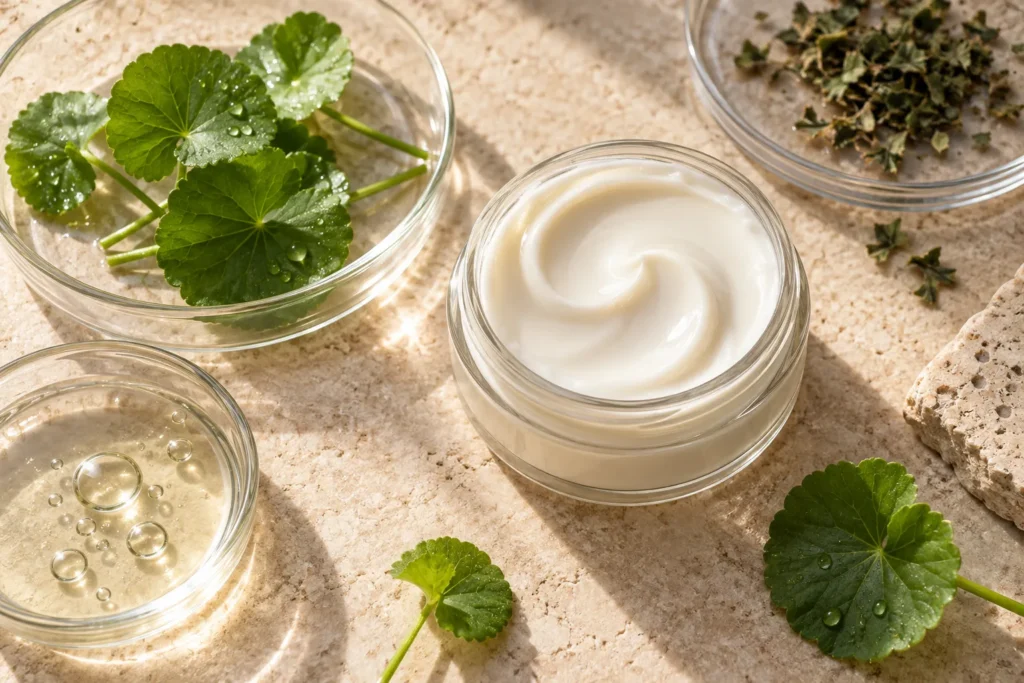
There are days when the skin seems to carry the story of everything you have been through. A poor night’s sleep, a change in weather, a hot shower or a demanding week can leave it looking dry, tired, uneven or more reactive than usual. When mature skin begins to feel this way, it is natural to search for something gentle enough to respect it but purposeful enough to make a visible difference. That search is one reason Centella asiatica has become such an important botanical in modern skincare conversations.
Centella is sometimes presented as though it appeared overnight, wrapped in a new trend and given a fashionable nickname. In reality, it has a long history of traditional use, while its characteristic plant compounds have attracted sustained scientific interest. Formulators value it not because one botanical can solve every concern, but because a carefully selected extract can contribute a useful skin-conditioning dimension to a balanced cream. For dry, mature and stressed-looking skin, that supporting role can make genuine formulation sense.
What is Centella asiatica?
Centella asiatica is a small leafy plant also known as gotu kola, Indian pennywort and tiger grass. It grows in warm, moist regions and has been used in traditional systems of care across parts of Asia for generations. The plant contains naturally occurring triterpenes and related compounds, including asiaticoside, madecassoside, asiatic acid and madecassic acid. These names matter to researchers and formulators because they help explain why one Centella extract may not be identical to another.
A botanical ingredient is never simply the name of a plant on a label. The part of the plant used, the extraction method, the concentration and the finished formula all influence what reaches the skin and how the product feels. This is why responsible formulation begins with more than the popularity of an ingredient. Centella must earn its place by complementing the moisturising, emollient and conditioning system around it.
That distinction is important when the skin already feels unsettled. A dramatic marketing claim can make a botanical sound like a medicine, while a vague claim can reduce it to decoration. We prefer a more useful middle ground: recognise the plant’s researched characteristics, respect the limits of cosmetic skincare and formulate it alongside ingredients with different jobs. That approach allows Centella to contribute without being asked to carry the entire promise of the cream.
Why stressed-looking skin needs a thoughtful approach
Stressed-looking skin is not one single condition. It may look dull, dry, rough, flushed, crepey or more lined, and it may feel tight after cleansing or uncomfortable in changing weather. Mature skin can show several of these signs at the same time because the outer barrier, surface lipids and water balance do not always behave as they once did. The emotional effect can be surprisingly strong when the face no longer seems to recover from ordinary life as quickly.
You may notice yourself checking the mirror before a conversation or choosing clothing that covers your arms because the skin looks fragile. You may buy a strong exfoliant to chase smoothness, then discover that the skin feels even more exposed. None of this means that you have neglected yourself or that the skin has suddenly become impossible to care for. It means the routine needs to become more supportive, more consistent and less interested in forcing rapid change.
Our guide to why the skin can feel more sensitive during midlife explores how these changes can appear in everyday life. The practical lesson is that mature skin often responds better to gentle cleansing, dependable moisture and protection from avoidable stress. A botanical such as Centella can sit comfortably within that philosophy. It is a supporting ingredient for a routine built around the whole skin environment.
Why formulators keep returning to Centella
Centella has remained interesting because its characteristic compounds have been investigated in relation to antioxidant activity, inflammatory pathways and processes involved in tissue repair. Much of that research uses specific extracts, isolated compounds, laboratory models or wound-care settings, so it should not be converted into sweeping promises for an everyday cosmetic cream. Even so, the research gives formulators a rational basis for considering Centella as more than a decorative botanical. It points towards skin-conditioning potential that can complement a barrier-supportive formulation.
For cosmetic care, the most relevant language is often the simplest. Centella can contribute to formulas intended to soothe the feel of dry, stressed-looking skin, support a more comfortable surface and improve the cared-for appearance of the skin. Those are meaningful benefits when the skin has begun to look tired or feel easily unsettled. They do not require us to claim that a cream diagnoses, cures or reverses a medical condition.
This measured confidence is central to how Reno Cream speaks about ingredients. We are proud of the formulation, yet we do not isolate one plant and pretend the rest of the formula is unimportant. The skin experiences the finished cream, including its texture, water-binding ingredients, oils, emollients, vitamins and supporting botanicals. Centella is valuable precisely because it belongs to that complete system.
Centella and the appearance of dry, mature skin
Dryness can make mature skin look more lined, less luminous and more fragile than it otherwise would. When the outer surface is rough and short of moisture, light reflects unevenly and every crease can appear more noticeable. Regular moisturising softens that surface, improves suppleness and helps the skin look more comfortable. Centella adds botanical support to that cosmetic foundation rather than replacing it.
A cream for mature skin still needs proven moisturising architecture. Humectants help attract water, emollients soften rough texture, and more protective components help slow the rapid return of tightness. If those fundamentals are missing, a fashionable plant extract cannot rescue the product. This is why we place Centella within Reno Cream’s broader combination of glycerin, hyaluronic acid, oils and conditioning ingredients.
The result is a more coherent experience for the skin. Water-binding support helps address surface dehydration, emollience improves softness, and the botanical blend contributes another layer of care for stressed-looking areas. This is especially useful when the concern is not one isolated dry patch but a pattern of dryness, dullness, uneven texture and visible fatigue. A multi-functional formula can respond to that pattern without turning the bathroom shelf into a complicated laboratory.
Repair: supporting the skin barrier first
Repair is the first step of the Skin Trifecta Method™ because the outer barrier influences nearly everything that follows. When that barrier is repeatedly stressed by hot water, harsh cleansing, friction or excessive exfoliation, the skin can lose moisture more readily and feel less comfortable. A supportive routine does not attempt to strip the surface into smoothness. It reduces unnecessary pressure and gives the skin a better environment in which to function.
Centella fits the Repair step as a complementary botanical in a barrier-conscious cream. It is not a replacement for humectants, emollients or sensible cleansing, and it does not rebuild the skin through one dramatic action. Its role is to add skin-conditioning support within a formula designed to soften, moisturise and improve the feel of stressed-looking skin. That is a quieter promise, but it is also a more useful one.
Daily habits still matter. Use warm rather than very hot water, cleanse gently and pat the skin after bathing instead of rubbing it hard. Apply cream while the skin is slightly damp, then give rough or tight areas a second light layer if needed. Repair becomes a routine of supportive choices rather than a race to find the strongest product.
Nourish: giving mature skin more than one kind of support
Nourish describes the ingredients and habits that help the skin feel soft, flexible and comfortable. Glycerin and hyaluronic acid support water binding at the surface, while emollients and oils help smooth dry texture. Black seed oil, vitamin E, MSM and allantoin add further dimensions to the Reno Cream formulation. Centella joins this network as part of the selected botanical blend.
This is deliberate formulation rather than ingredient collecting. Every addition must work within the cream’s texture, stability and overall purpose. If a product contains dozens of fashionable extracts but lacks enough moisturising substance, the label may sound exciting while the skin still feels tight. Nourishment is measured in the complete experience of the formula, not the length of the botanical list.
Our article on why Reno Cream combines multiple skin-supporting ingredients instead of following one trend explains this philosophy in greater depth. Centella sits beside chamomile, licorice, green tea, rosemary, ginger and other selected extracts because each brings a different characteristic. The goal is complementarity, not competition. Mature skin is better served by a thoughtful ensemble than by one ingredient shouting above everything else.
Defend: reducing the stress that keeps returning
Defend is sometimes mistaken for sunscreen alone, although sun protection is an essential part of it. The step also includes reducing friction, protecting the hands during cleaning, avoiding unnecessarily hot water and choosing clothing that does not continually rub delicate-looking areas. These practical decisions help preserve the comfort created by moisturising. They also stop the routine from asking one cream to compensate for every source of daily stress.
Centella’s place in the Defend step is supportive rather than absolute. Its researched antioxidant characteristics are one reason formulators value it, but a botanical extract is not a substitute for sunscreen, shade or protective clothing. The finished formula can help condition the skin while those external measures reduce ongoing exposure. Defence works best as a system.
You can explore the full Skin Trifecta Method™ guide to Repair, Nourish and Defend if you want a simple framework for organising the routine. It shifts attention away from chasing one visible concern at a time. Instead, it asks what the skin needs to feel supported today and what can reduce the same stress tomorrow. That is a more compassionate way to care for changing skin.
Why Centella is not a stand-alone miracle
Skincare trends often turn a useful ingredient into a test of loyalty. One month the answer is Centella, the next it is a peptide, an acid or a new oil. The problem is not enthusiasm; it is the suggestion that one ingredient can replace formulation skill. Mature skin usually needs hydration, emollience, conditioning and protection at the same time.
The concentration and quality of a Centella extract matter, but so does everything surrounding it. A poorly balanced product can still feel drying or irritating even when it contains a respected botanical. Conversely, a thoughtful cream may use Centella at a supporting level that contributes to the whole without dominating the marketing. Ingredient synergy matters because the skin never encounters the label one line at a time.
We discuss this principle in why ingredient synergy matters more than a trending hero ingredient. Reno Cream was built to be multi-functional, bringing several classes of ingredients into one coherent daily product. Centella is part of that architecture, not a slogan pasted onto it. That distinction is what turns botanical interest into practical skincare.
How Centella complements allantoin and the wider formula
Allantoin is another ingredient valued in products for dry, rough and stressed-looking skin. It is widely used as a skin protectant and conditioning ingredient, helping formulas feel gentle and supportive. Within Reno Cream, allantoin and Centella do not duplicate each other exactly. They contribute different characteristics to the wider aim of comfort, softness and barrier-conscious care.
That partnership is strengthened by the moisturising base. Glycerin and hyaluronic acid help attract and retain water at the surface, while oils and emollients improve slip and reduce roughness. Vitamin E and a vitamin C derivative add antioxidant-supporting dimensions, and black seed oil contributes its own conditioning character. The botanical complex then adds breadth without replacing those essentials.
For readers interested in the role of a specific conditioning ingredient, our guide to why allantoin belongs in a cream for dry, stressed-looking skin provides useful context. The same formulation lesson runs through both articles. An ingredient earns trust through what it contributes to a balanced product, not through the size of its name on the front of a jar.
Who may appreciate Centella in a skincare formula?
Centella-containing skincare can be appealing when the skin looks dry, tired, uneven or stressed by the environment. It may also suit people who prefer a formula with botanical support but do not want to rely on a lightweight plant gel alone. Mature skin often benefits from this balance because it may need richer moisturising alongside gentleness. The finished product and the complete ingredient system remain more important than the botanical name by itself.
People who have overcomplicated their routine may also appreciate a multi-functional cream. When several serums and active products are layered together, it becomes difficult to know which one is helping and which one is making the skin feel unsettled. A comprehensive moisturiser can simplify the routine while still offering more than basic hydration. Consistency then has a chance to replace constant experimentation.
Apply the cream to clean, slightly damp skin once or twice daily according to need. Use enough to create even coverage, and give extra attention to areas that feel tight or look rough. On the body, this may include the forearms, shins, hands, elbows and chest. On the face, use gentle strokes and allow the product to settle before applying daytime sunscreen.
What realistic improvement can look like
Supportive skincare should be judged by meaningful cosmetic changes rather than impossible promises. The skin may feel less tight after washing, rough areas may feel smoother and the surface may look more supple when moisture is restored. Dryness can become less visually dominant, helping fine lines and crepey texture look softer. These outcomes can make daily life more comfortable even though they do not erase the natural structure or history of mature skin.
Centella contributes to this process as part of the formula, but improvement still depends on the entire routine. Frequent hot showers, aggressive scrubs and inconsistent moisturising can overwhelm even a carefully designed cream. Give the skin a stable period of gentle care before deciding that it needs another strong active. Observation becomes far more useful when the routine stops changing every few days.
Confidence can return quietly. It may be the moment you stop thinking about tightness halfway through the day, or when your arms feel comfortable enough that clothing is chosen for pleasure rather than concealment. A cream cannot decide how you feel about ageing, but it can make the skin feel more cared for. That is a worthwhile role for skincare to play.
Why Centella belongs in Reno Cream
We included Centella because Reno Cream was never intended to be just another basic moisturiser. The formula was designed for skin with overlapping needs: dryness, roughness, visible stress, uneven-looking texture and the changes that become more noticeable with age. Centella brings botanical conditioning support to that broader purpose. It works alongside the core moisturising and nourishing system rather than standing apart from it.
This is the Reno formulation philosophy in practice. Repair supports the barrier, Nourish supplies water-binding and softening ingredients, and Defend helps the skin face everyday environmental stress more comfortably. Centella has a credible place within all three ideas when its role is described responsibly. It helps make the formula more complete without turning one plant into a cure-all.
If your skin is asking for more thoughtful support, discover Reno Cream for dry, mature and problem-looking skin. Use it consistently, protect the skin from avoidable stress and let the whole formulation do the work it was designed to do. Centella may be one of the names that draws attention, but the real strength is the balanced cream around it. That is how a botanical becomes part of a dependable daily ritual rather than another passing trend.