
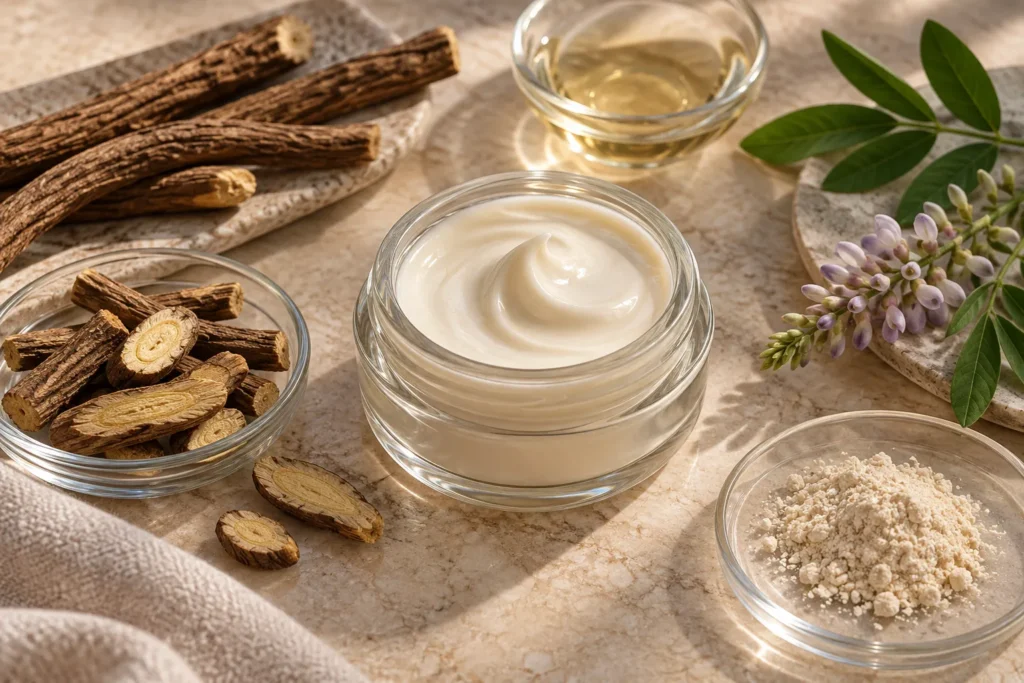
There is a particular kind of disappointment that comes from seeing the skin look uneven when you have been caring for it faithfully. You may notice darker patches, lingering marks, dull areas or a complexion that no longer seems to reflect light as evenly as it once did. These changes can feel more visible in mature skin, especially when dryness makes texture and tone look harsher. It is not vanity to want the face in the mirror to look comfortable, cared for and recognisably yours.
Licorice root has earned a thoughtful place in skincare because it offers more than a familiar botanical name. Extracts from Glycyrrhiza species contain compounds that have attracted research interest for antioxidant, soothing and appearance-supporting properties, particularly in relation to uneven-looking tone. A good formulator does not turn that research into an impossible promise. Instead, licorice is used as one complementary part of a balanced cream for dry, mature and stressed-looking skin.
What is licorice root in skincare?
Licorice is a group of plants within the Glycyrrhiza genus, with Glycyrrhiza glabra and Glycyrrhiza uralensis among the names commonly seen in botanical formulations. The roots contain a complex range of naturally occurring compounds, including glabridin, liquiritin, glycyrrhizin and related flavonoids. Different extracts can emphasise different constituents depending on the plant species, root material and extraction process. This means that the words “licorice root” on two labels do not automatically describe identical ingredients.
In cosmetic skincare, licorice is often selected for formulas concerned with dullness, visible stress and uneven-looking tone. Some licorice compounds have been studied in laboratory and animal models for their interaction with pathways involved in pigmentation and oxidative stress. Those findings help explain why formulators remain interested in the plant, but they do not make every licorice cream equivalent to a clinical treatment. The finished product, concentration and complete formulation still determine the cosmetic experience.
This is where careful language protects the value of a good ingredient. Licorice root can support a brighter, more even-looking appearance when used within a consistent skincare routine. It can also contribute botanical conditioning to products designed for dry or stressed-looking skin. These are meaningful cosmetic roles without claiming that one extract removes every spot or reverses every sign of sun exposure.
Why uneven-looking tone can feel more noticeable with age
Mature skin carries the accumulated influence of sunlight, hormones, inflammation, dryness and ordinary time. Pigment can become less evenly distributed, and old marks may seem slower to fade than they once did. The surface can also become rougher or drier, causing light to reflect unevenly and making differences in tone appear stronger. This combination can make the complexion look tired even when you feel energetic and well.
The emotional effect often arrives in small moments. You may angle your face away from direct light, apply more foundation than you enjoy, or study a photograph before looking at the people in it. Those habits do not mean that mature skin is something to hide. They reveal how visible changes can quietly influence confidence and how you show up in daily life.
Supportive skincare cannot rewrite the entire history of the skin, but it can improve the conditions that make unevenness look more pronounced. Moisture softens dry texture, emollients help the surface feel smoother and sunscreen reduces ongoing UV stress. Selected botanicals can add complementary antioxidant and conditioning support. The aim is better-looking, more comfortable skin rather than an unrealistic return to a different age.
Why formulators are interested in glabridin and other licorice compounds
Glabridin is a flavonoid found in the hydrophobic fraction of some Glycyrrhiza glabra extracts. Research has explored its effects on tyrosinase activity and melanin-related processes in cell and animal models, which is one reason licorice appears in products for uneven-looking tone. Other licorice constituents have their own chemical characteristics and research histories. A responsible formulator considers the extract being used rather than treating the whole plant name as one standardised substance.
For a cosmetic cream, this science points towards potential appearance support rather than guaranteed pigment removal. Skin tone is influenced by many factors, and mature skin often presents several concerns at once. A licorice-containing moisturiser can help condition the skin and support a brighter, more even-looking surface while the broader routine addresses hydration and protection. This is a realistic and still valuable reason to include the ingredient.
The same research interest extends to antioxidant and soothing characteristics associated with licorice compounds. Oxidative stress is one of the processes connected with visible environmental ageing, while easily unsettled skin can look red or uneven. Licorice can therefore sit comfortably in a formula designed to support the look and feel of stressed skin. It does not need to behave like a medicine to contribute intelligently to cosmetic care.
A botanical cannot compensate for a weak moisturiser
Dryness can make uneven-looking tone appear more severe because a rough surface scatters light irregularly. It can also make fine lines, crepiness and dullness more noticeable. This is why a licorice product for mature skin still needs a strong moisturising foundation. The botanical story should sit on top of excellent hydration and emollience, not replace them.
Humectants such as glycerin and hyaluronic acid help attract and hold water near the skin surface. Oils and emollients soften rough texture and help the skin feel more supple. Conditioning ingredients such as allantoin, MSM and vitamin E add further support within a comprehensive cream. Licorice then contributes to a system that is already doing the essential work of moisturising.
Reno Cream was designed around that hierarchy. We begin with what dry, mature and problem-looking skin needs every day, then add botanicals for complementary jobs. The result is not a basic lotion decorated with a fashionable plant extract. It is a multi-functional cream in which licorice belongs to a complete formulation.
Repair: support the barrier before chasing brightness
The Repair step of the Skin Trifecta Method™ begins with the skin barrier. When the outer surface is repeatedly stripped by harsh cleansers, hot water, scrubs or overlapping active products, the skin can feel tight and look more uneven. A compromised routine can also make brightening products harder to tolerate. Barrier-conscious care creates a steadier foundation for everything else.
Repair does not mean forcing the skin through discomfort in the hope that new skin will emerge. It means cleansing gently, restoring moisture and reducing habits that continually remove surface lipids. Apply cream to slightly damp skin and allow enough time for a stable routine to show its effect. When the surface becomes softer and better conditioned, the complexion often looks calmer and more luminous.
Licorice fits this step as a supportive botanical rather than as a peeling or bleaching agent. It can contribute to formulas intended to improve the cared-for appearance of stressed-looking skin. This makes it particularly suitable for mature routines that prioritise comfort alongside tone. Repair and radiance should work together, not compete.
Nourish: give the skin overlapping forms of support
Nourish means supplying the skin with more than water alone. Mature skin may need humectants to bind moisture, emollients to soften texture and oils to improve comfort across dry areas. It may also benefit from vitamins and botanicals that contribute antioxidant and conditioning characteristics. Licorice is one part of that wider nourishing architecture.
Reno Cream brings together black seed oil, MSM, allantoin, glycerin, hyaluronic acid, vitamin E and a vitamin C derivative. Its botanical blend includes licorice alongside Centella asiatica, chamomile, green tea, rosemary, ginger and other selected extracts. The ingredients were chosen for complementary roles so one headline ingredient is never asked to perform every task. This is especially important when the skin looks dry, uneven, dull and fragile at the same time.
Our article on why ingredient synergy matters more than a trending hero ingredient explains this approach in depth. The skin encounters the finished cream, not a list of isolated marketing claims. Licorice becomes more useful when hydration, softness and barrier support are already present. That is the difference between adding a botanical and truly formulating with it.
Defend: stop new visible stress from taking over
Defend is essential when the goal is a more even-looking complexion. UV exposure can deepen existing unevenness and contribute to new visible changes, even when the skin does not burn. Daily broad-spectrum sunscreen, shade, hats and sensible timing protect the progress created by the rest of the routine. No brightening botanical can replace this step.
Defence also includes reducing friction and avoiding repeated irritation. Picking at dry patches, overusing scrubs or layering several strong products can leave marks and visible stress behind. A calmer routine allows licorice and the moisturising formula to support the skin without competing against daily damage. The best results come from what you prevent as well as what you apply.
You can explore the complete Skin Trifecta Method™ guide to Repair, Nourish and Defend for a simple framework that keeps these steps connected. It is particularly useful when several mature-skin concerns overlap. Instead of buying a different product for dryness, texture, dullness and tone, the method builds one coherent environment. Licorice fits because it adds targeted botanical value within that larger plan.
Licorice root and brighter-looking mature skin
Brightness in skincare should not mean changing the natural colour of the skin. It means helping the complexion look less dull, more even and better hydrated so light can reflect from the surface more smoothly. This distinction matters for every skin tone. Mature skin deserves radiance without being told that its natural pigment is a flaw.
Licorice can support this goal through its place in formulas intended for uneven-looking tone. Moisture remains central because hydrated skin usually looks plumper and more luminous than parched skin. Gentle conditioning reduces the roughness that can make shadows and lines more visible. The botanical component then adds another dimension to the overall appearance strategy.
Our guide to supporting a brighter, more even-looking complexion after 50 explains why the routine must address both tone and texture. It also shows why over-exfoliation can work against the desired result. Licorice makes the most sense in a routine that respects the barrier and protects the skin from ongoing exposure. Brightness should come from better care, not from repeated aggression.
What licorice root can and cannot reasonably do
A cosmetic formula containing licorice can support a more even-looking complexion, condition dry skin and complement antioxidant care. It can help the skin look brighter when used consistently within a complete moisturising routine. It cannot guarantee the removal of every dark mark or determine the cause of every colour change. Different types of visible pigmentation behave differently and respond at different speeds.
This realistic scope does not weaken the ingredient. It clarifies what success can look like: a surface that appears less dull, feels softer and shows fewer harsh contrasts created by dryness. The skin may look more rested and makeup may sit more evenly. Those cosmetic improvements can be genuinely encouraging.
If uneven tone is a major concern, our article on uneven-looking skin tone after 50 offers a broader explanation. It places botanical support alongside moisturising, gentle exfoliation and sun protection. That balanced view prevents licorice from becoming another miracle trend. It remains a valuable ingredient within an intelligent routine.
Why the extract and the formulation both matter
The term licorice root extract covers many possible materials. Water-soluble and oil-soluble extracts can contain different proportions of plant compounds, and the botanical species can differ. A formulator must consider stability, compatibility and the type of benefit expected from the ingredient. The name alone cannot tell the whole story.
The base of the product also changes how the ingredient is experienced. A thin serum may deliver licorice in one way, while a nourishing cream supports the skin with moisture and emollience at the same time. For dry mature skin, that combination can be particularly useful because tone is not the only issue. Comfort, softness and barrier support remain part of the desired result.
This is why Reno Cream uses a botanical blend inside a multi-functional base. Licorice is reinforced by the moisturising and conditioning system rather than left to perform alone. It sits beside calming-feeling botanicals such as chamomile, whose gentle support still matters in skincare. The formula is designed around the reality that mature skin has several simultaneous needs.
How to use Reno Cream in an uneven-tone routine
Begin with gentle cleansing and avoid water hot enough to leave the skin tight. Pat the skin lightly, then apply Reno Cream while the surface is still slightly damp. Use enough product to create even coverage across the face, neck or body area being treated. Vigorous rubbing is unnecessary and can be uncomfortable on fragile-looking skin.
In the morning, follow with broad-spectrum sunscreen on exposed areas. At night, apply a comfortable layer and give extra attention to dry zones where uneven texture makes tone look stronger. If you use another active product, introduce it thoughtfully rather than adding several at once. A stable routine makes it easier to see what the skin actually appreciates.
Use the cream consistently once or twice daily according to need. Look for progressive changes in softness, comfort, hydration and the overall cared-for appearance of the skin. Avoid judging the routine by one photograph or one morning in difficult lighting. Mature skin responds to steady support more meaningfully than to constant product switching.
Remember that uneven-looking tone is not limited to the face. The hands, forearms, neck and chest often receive years of incidental sunlight while receiving far less daily care, so differences in colour and texture can become particularly visible there. Extend moisturiser and daytime sun protection to these areas, using gentle strokes and enough product for complete coverage. Treating the exposed body as part of the same routine creates a more coherent result and prevents facial skincare from carrying the whole burden alone.
It can also help to take photographs only occasionally and in similar lighting rather than examining the skin every day. Tone changes are gradual, and daily scrutiny can make real improvement difficult to recognise. Pay equal attention to softness, comfort and how easily the cream fits into the routine, because those signs show whether the formula is supporting the skin consistently.
A formulation that respects the whole complexion
Licorice root fits a mature-skin formulation because it addresses appearance without ignoring comfort. It brings research interest around tone and antioxidant support into a cream already designed to moisturise and nourish. That makes it more relevant than a token extract added for label appeal. The ingredient has a clear job within the formula.
Reno Cream reflects the belief that mature skin should not have to choose between a richer moisturiser and a sophisticated botanical product. The cream combines both ideas through the Skin Trifecta Method™. Repair supports the barrier, Nourish improves softness and moisture, and Defend helps reduce ongoing environmental stress. Licorice strengthens that philosophy by adding support for a brighter, more even-looking complexion.
If dryness, dullness and uneven-looking tone have begun to affect how you feel in your skin, discover Reno Cream for dry, mature and problem-looking skin. Use it with consistency, sunscreen and a gentler routine rather than expecting one ingredient to transform everything overnight. Licorice root is not included as a passing trend. It belongs because thoughtful mature skincare is strongest when every ingredient contributes to the whole.