
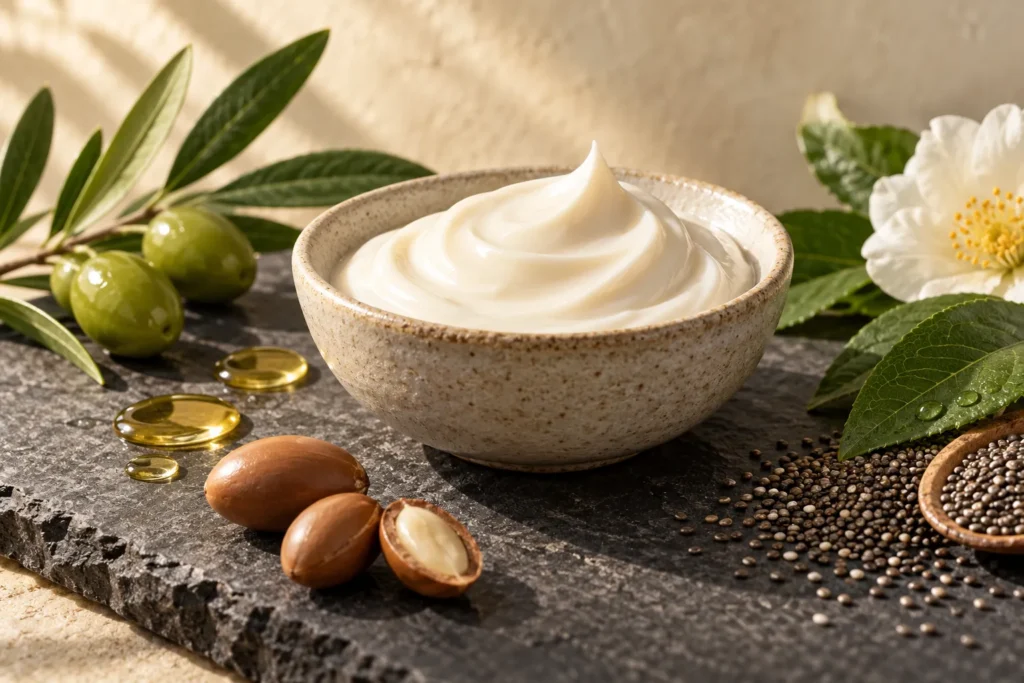
“Nourishing” is one of the most common words in skincare, but it is also one of the least clearly explained. A cream may promise to nourish dry skin, an oil may be described as deeply nourishing, and an advertisement may tell you that mature skin needs more nourishment. But what is actually happening when you put a nourishing skincare product on your skin?
Skin does not eat moisturiser in the way your body absorbs nutrients from food. In cosmetic skincare, nourishing is better understood as supporting the skin with useful hydration, oils, conditioning ingredients and other components that help it remain soft, comfortable and well cared for. For mature skin, that distinction matters because nourishment is not one magical ingredient or one biological process.
Nourishing Skin Is Not the Same as Feeding Skin
The language of skincare can sometimes make the skin sound like a hungry organ waiting to absorb vitamins and oils from a jar. The reality is more complicated. Your skin receives nutrients through the body, while topical skincare primarily interacts with the outer layers of the skin.
That does not make topical skincare unimportant. A well formulated moisturiser can improve hydration, reduce the feeling of dryness, soften rough skin and support a more comfortable skin surface. When we use the word nourishing at Reno Cream, this practical cosmetic meaning is what we have in mind.
Why Does Mature Skin Often Feel as Though It Needs More Nourishment?
Many people notice that the moisturiser they used comfortably in their thirties or forties begins to feel less satisfying later in life. Skin may become drier, thinner looking or rougher, while tightness can return surprisingly quickly after moisturising. Changes associated with ageing, menopause, environment, cleansing habits and accumulated sun exposure can all influence how mature skin looks and feels.
This is why skin after 60 can sometimes feel as though moisturiser alone is no longer enough. It does not necessarily mean the skin needs dozens of products. It may simply mean that its current needs are different from the needs it had years ago.
Hydration Is Part of Nourishment
Water is fundamental to the appearance and feel of the outer skin. When skin is poorly hydrated, it can feel tight and rough, while fine surface lines may become more noticeable. Ingredients known as humectants are commonly included in moisturisers because they help support hydration within the outer skin.
This is one reason glycerin and hyaluronic acid are included in Reno Cream. They contribute to the hydration side of the formulation. They are useful ingredients, but we do not expect either of them to perform every job that dry mature skin may need.
Dry Skin and Dehydrated Skin Are Not Exactly the Same
People often use dry and dehydrated as though they mean the same thing, but the distinction can help explain why nourishment involves more than water. Dehydration relates to water content, while dry skin is generally associated with insufficient oils and lipids in the skin’s outer environment. A person can experience characteristics of both at the same time.
Our guide Dry Skin vs Dehydrated Skin: What’s the Difference? explains this in more detail. Once you understand the difference, it becomes easier to see why simply applying a watery serum may not always leave very dry mature skin feeling comfortable for long.
Oils Have a Different Job
Oils can contribute emollience and conditioning, helping dry skin feel softer and smoother. Their role is different from the role of humectants. That difference is important because a good formulation does not need every ingredient to perform exactly the same function.
Reno Cream contains black seed oil from Nigella sativa as an important oil based component of the formula. We value black seed oil, but we do not describe it as a miracle ingredient that nourishes or repairs everything by itself. Its value comes from the job it performs alongside ingredients doing different jobs.
What Does Skin Conditioning Mean?
Conditioning is another skincare term that can sound vague until you experience the difference yourself. Properly conditioned dry skin generally feels softer, smoother and more supple than skin that has been left rough and uncomfortable. The objective is not to change your biological age but to improve the condition of the skin surface.
This becomes particularly relevant for areas such as the arms, legs, hands, neck and chest. Mature skin in these areas can become increasingly dry and rough even when the face receives considerable attention. Consistent conditioning can therefore be one of the simplest improvements you make to a mature skincare routine.
The Skin Barrier Is Part of the Nourishment Conversation
The outer skin barrier helps limit excessive water loss and provides an important interface between your body and the external environment. If your routine repeatedly leaves the skin irritated or stripped, simply adding more moisturiser may become an endless cycle. Nourishment makes more sense when it sits within a routine that also respects the skin barrier.
Our article Skin Barrier Repair: What Actually Helps and What Can Make It Worse? explores this relationship. Gentle cleansing, sensible bathing and avoiding unnecessary over exfoliation can sometimes be just as important as what comes out of the moisturiser jar.
Nourishment Does Not Mean Applying More and More Products
A complicated routine can create the impression that every skin need requires a separate bottle. One product provides hydration, another oil, another barrier support, another antioxidants and another botanical ingredients. Before long, a simple skincare routine has become a chemistry experiment on your bathroom shelf.
There can be good reasons to use several products, particularly when specific active ingredients are appropriate for your goals. But mature skin does not automatically benefit from the largest possible routine. Sometimes thoughtful formulation can bring several complementary cosmetic functions together without requiring layer after layer of product.
This Is Where Multi Functional Skincare Becomes Useful
Multi functional skincare does not mean one cream can medically treat every skin condition. It means a cosmetic formulation can be designed with several related skin needs in mind. Hydration, emollience, conditioning and support for comfortable dry skin can coexist within the same formulation.
We discussed this idea in The Multi Functional Skincare Idea Behind Reno Cream. The concept developed from a simple question: if mature skin commonly experiences several overlapping needs, why should a moisturiser be designed as though only one of those needs exists?
Skin Needs First, Ingredient Jobs Second, Formulation Third
This has become one of the clearest ways to explain our formulation philosophy at Reno Cream. Skin needs first, ingredient jobs second, formulation third. Instead of choosing a fashionable ingredient and building an entire product story around it, we begin by considering what dry and mature skin needs from an everyday cosmetic cream.
We then look at the jobs different ingredients can perform. Hydration is one job, oil based conditioning is another, while other ingredients contribute different supporting roles within the formula. Finally, those ingredients have to work together as a usable finished product.
Why We Do Not Believe in the Hero Ingredient Approach
Skincare trends often revolve around one ingredient at a time. For several months it may be hyaluronic acid, then a particular botanical extract, peptide, oil or vitamin becomes the new answer to almost everything. Some of these ingredients can be genuinely useful, but usefulness does not turn an ingredient into a complete skincare routine.
Mature skin provides a particularly good example. If your skin is dry, rough, tight and becoming more fragile feeling, one ingredient may address only one part of that experience. We would rather ask how ingredients complement each other than force one ingredient to carry the entire marketing story.
Where Glycerin Fits Into Nourishing Skincare
Glycerin is a humectant widely used in cosmetic moisturisers. Within Reno Cream, its job relates primarily to hydration. It helps support water within the outer skin and contributes to the moisturising character of the formulation.
Glycerin is not glamorous compared with some fashionable skincare ingredients, but that is exactly why ingredient philosophy matters. An ingredient does not need to be exotic to have a useful job. We choose ingredients according to what they contribute rather than how exciting their name sounds in an advertisement.
Where Hyaluronic Acid Fits
Hyaluronic acid has become one of the best known skincare ingredients of recent years. In our formulation, it contributes to hydration rather than being presented as an answer to every form of skin ageing. That is an important distinction.
Hyaluronic acid does not permanently tighten loose skin or reverse decades of structural ageing. It can, however, form part of a formulation designed to help dry skin feel better hydrated. When combined thoughtfully with ingredients performing complementary roles, that contribution becomes part of a wider system.
Why Black Seed Oil Is Important to Reno Cream
Black seed oil has been central to our ingredient thinking from the beginning. Derived from Nigella sativa, it provides an oil based component within Reno Cream and contributes to the conditioning side of the formulation. This is a different role from that performed by glycerin and hyaluronic acid.
We do not need to pretend black seed oil does everything in order to value it. Its importance comes from what it contributes within the complete cream. That principle applies throughout the formula: different ingredients, different jobs, one cream.
Where MSM and Allantoin Fit
MSM and allantoin are also part of the Reno Cream formulation. They sit alongside our humectants and oil based components as part of a broader approach to conditioning and supporting dry, mature skin. Again, their value should be considered within the formulation rather than as isolated miracle ingredients.
The same applies to vitamin E, our vitamin C derivative and the botanical extracts included in the cream. Each ingredient contributes within a larger cosmetic system. The finished formula is ultimately what you apply to your skin, not an isolated ingredient list.
What Do We Mean by Ingredient Synergy?
Ingredient synergy sounds technical, but the idea is simple. If mature skin has several overlapping needs, ingredients that perform complementary jobs can be brought together within one formulation. The objective is not to cram as many ingredients as possible into a jar.
More ingredients do not automatically make a better cream. The ingredients need a reason to be there, appropriate formulation and compatibility with the intended product. We explore this philosophy further in What If Your Moisturiser Did More Than Add Moisture?.
Is Nourishing Skin the Same as Repairing It?
Not exactly. In everyday cosmetic language, the two ideas overlap, but they should not be treated as identical. Nourishing focuses more naturally on providing hydration, oils and conditioning, while barrier support also involves reducing practices that repeatedly leave skin dry or irritated.
This distinction is useful because the word repair can easily become exaggerated. A cosmetic moisturiser can support the skin barrier and improve dryness and comfort, but it should not be described as medically reconstructing every form of skin damage. Good skincare language should remain useful without becoming unrealistic.
Is Nourishing Skin the Same as Moisturising?
Moisturising is certainly central to nourishment, but the word nourishing can help us think more broadly about what a moisturiser contains and how the complete formula feels on the skin. A very lightweight product may provide hydration yet leave someone with very dry mature skin wanting more conditioning. Another formulation may combine hydration with a richer emollient character.
Neither approach is automatically superior for everyone. Skin type, climate, body area and personal preference matter. If your current moisturiser leaves you comfortable throughout the day, there is no rule saying you need something heavier simply because you have reached a particular age.
Why Does My Skin Feel Dry Again So Quickly?
This is one of the most common frustrations among people with mature skin. You apply moisturiser after showering, your skin initially feels comfortable and then tightness gradually returns. Sometimes the answer is more frequent application, but sometimes it is worth examining the whole routine.
Very hot showers, harsh cleansing, dry indoor air and a product that is too light for your needs can all contribute. Our article Why Does My Skin Feel Dry Again Two Hours After Moisturising? explores these possibilities. Nourishing skincare begins with understanding why the dryness keeps returning rather than endlessly applying more product without asking questions.
Nourishing Crepey Skin
Crepey looking skin is a good example of where realistic expectations matter. Dryness can make fine lines and crepey texture appear more pronounced, so improving hydration and conditioning may make the skin look smoother and feel softer. That can be a worthwhile cosmetic improvement.
But nourishing moisturisers cannot permanently tighten significantly loose skin or completely reverse structural changes associated with ageing. Our article Why Does Skin Become Crepey With Age? explains the distinction. Nourishing crepey skin means caring for its dryness and condition, not pretending that moisturiser can turn back biological time.
Nourishing Skin During Menopause
Perimenopause and menopause can coincide with noticeable changes in skin dryness, texture and comfort. Some women find that products they used for years suddenly feel too light. This can make the idea of nourishment particularly relevant.
The answer does not necessarily involve buying a large collection of menopause specific products. It may involve reassessing hydration, conditioning, cleansing and sun protection within your existing routine. Our skincare routine during menopause provides a practical starting point.
Nourishing Skin After 60
After 60, simplicity can become increasingly valuable. Skin may be drier and less tolerant of aggressive routines, yet marketing often encourages mature consumers to add more acids, serums and treatments. A long routine is not automatically a nourishing one.
Our best skincare routine for women over 60 focuses on the fundamentals. Gentle cleansing, appropriate moisturising and sun protection provide a strong foundation. Active products can then be added thoughtfully if they are wanted and well tolerated.
Your Body Needs Nourishing Skincare Too
The face receives most of the attention in beauty advertising, but mature skin changes occur across the body. Arms, legs, hands, neck and chest can all become increasingly dry. In some people, these areas are considerably drier than the face.
Consistent body moisturising can improve softness, comfort and dryness related texture. This becomes particularly important during winter, when environmental conditions may make dryness more noticeable. Our Complete Winter Skincare Guide for Mature Skin explains how to adapt the routine during colder months.
Nourishing Hands After Frequent Washing
Hands are repeatedly exposed to water, cleansers, household products and environmental conditions. Even an excellent moisturiser can be washed away repeatedly throughout the day. This is why hand care often requires more frequent application than other body areas.
Apply moisturiser after washing when practical and use suitable gloves for wet work and household cleaning. Our guide Dry Hands From Frequent Washing: How to Keep Them Soft and Comfortable provides a simple routine. Nourishment works best when it is paired with reducing avoidable exposure.
Can You Over Nourish Your Skin?
The phrase itself is not particularly scientific, but you can certainly use more skincare than your skin needs or tolerates. Layering many products can lead to heaviness, pilling, clogged feeling skin or irritation depending on the ingredients and individual. More is not automatically more nourishing.
Pay attention to the response of your own skin. If it feels comfortable, soft and well moisturised, the routine may already be doing its job. Skincare should solve problems rather than create new ones simply because another product was added.
Nourishment Is Also About What You Stop Doing
Sometimes the most nourishing decision is not another ingredient. It is turning down the shower temperature, reducing excessive exfoliation, changing a cleanser that leaves your skin tight or wearing gloves before cleaning. These actions do not look glamorous in advertising, but they can make a meaningful difference.
This is why we resist reducing skincare to ingredients alone. Formulation matters, but so do habits and environment. A good cream should be part of sensible skin care rather than an excuse to continue stressing the skin and expecting a product to undo everything afterwards.
The Skin Trifecta Method Puts Nourishment in Context
Our Skin Trifecta Method™ is built around three ideas: Repair, Nourish and Defend. Nourish is deliberately the middle step because nourishment works best when considered alongside the other two. You can apply a rich moisturiser every evening, but if the rest of your routine repeatedly irritates the skin, you may still struggle with comfort.
Repair means reducing unnecessary stress and supporting a healthier outer skin environment through gentler habits. This includes avoiding excessive exfoliation, harsh cleansing and unnecessarily hot water. It does not mean claiming that a cosmetic cream medically repairs every form of skin damage.
Nourish means providing useful hydration, oils and conditioning through a thoughtfully designed moisturising formula. It is where our ingredient philosophy becomes particularly visible because different ingredients can perform complementary jobs. Nourishment is not about one superstar ingredient but about what the complete formula contributes.
Defend means reducing avoidable future stress. Appropriate sun protection, gloves for cleaning, sensible bathing and avoiding known irritants can all be part of this step. The objective is not to create perfect skin but to help maintain the skin you have as comfortably as possible.
Where Reno Cream Fits
Reno Cream was developed around the idea that dry, mature and problem prone skin can have several overlapping cosmetic needs. Rather than creating a cream whose entire identity depends on one ingredient, we designed the formulation around complementary ingredient jobs. Hydration, oil based conditioning and wider skin support are considered together.
Reno Cream is a cosmetic moisturising and conditioning cream. It does not replace sunscreen, prescription treatment or professional medical care, and it does not permanently reverse biological ageing. Its purpose is more practical: to help dry mature skin feel softer, smoother, moisturised and more comfortable as part of everyday care.
How Do You Know If Your Skin Is Properly Nourished?
You do not need a laboratory test to decide whether your everyday moisturising routine is comfortable. Pay attention to how the skin feels after application and several hours later. Does it remain soft and comfortable, or does tightness return almost immediately?
Also look at roughness, flaking and dryness related texture over time. Improvements in those areas can indicate that your routine is better suited to your skin. If your skin remains persistently uncomfortable despite sensible care, however, simply applying more moisturiser may not be the answer.
When Dry Skin Needs More Than Skincare
Persistent dryness can sometimes be associated with skin conditions, medications or wider health issues. Significant itching, inflammation, painful cracking, bleeding, weeping, swelling, widespread rash or signs of infection deserve appropriate professional assessment. New or changing skin lesions should also not be dismissed as ordinary dryness or ageing.
If a medication appears to coincide with a significant change in your skin, discuss it with your healthcare professional rather than stopping prescribed treatment yourself. Cosmetic skincare can support comfort, but it should not be asked to diagnose or manage conditions beyond its role.
Nourishing Your Skin Is Simpler Than the Marketing Makes It Sound
Strip away the beauty language and nourishing mature skin becomes surprisingly practical. Help the outer skin maintain hydration, provide appropriate oils and conditioning, avoid repeatedly stripping or irritating it and protect it from environmental stresses where possible. Then choose products you can use consistently rather than chasing every new ingredient trend.
That is the thinking behind Reno Cream and the Skin Trifecta Method™. Skin needs first, ingredient jobs second, formulation third keeps the focus where it belongs: on what the skin actually needs from the complete product. Nourishment is not magic and it is not about feeding your skin from a jar. It is one practical part of helping mature skin remain soft, comfortable and well cared for through Repair, Nourish and Defend.